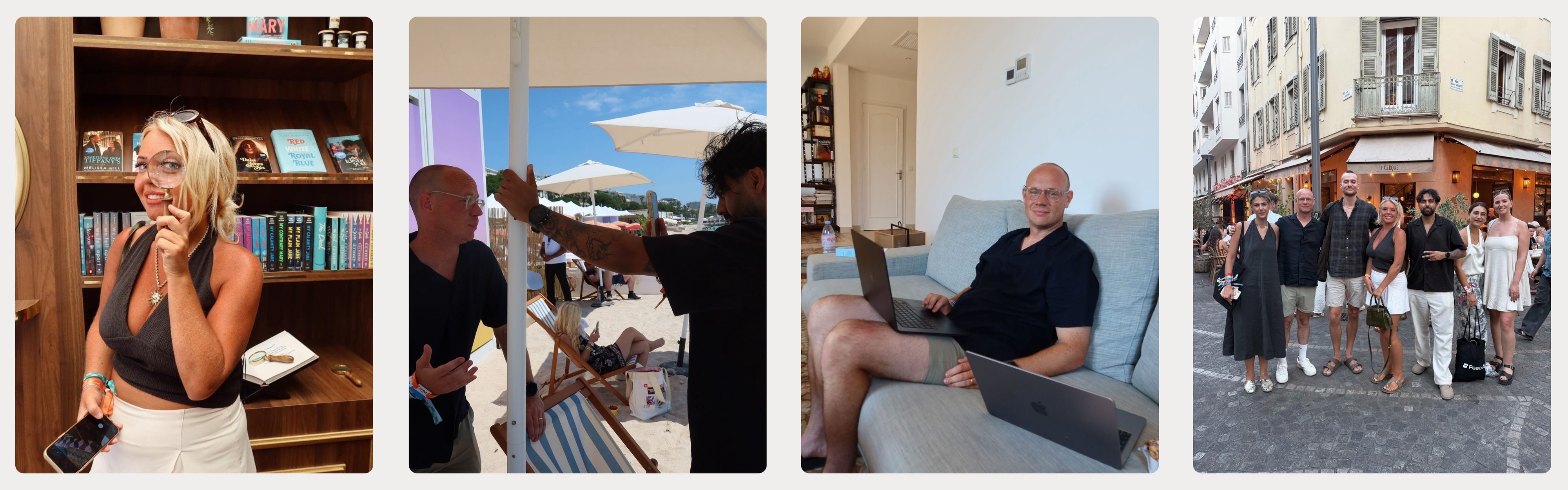
Are we missing the point? From Cannes Lions: Here's what actually mattered about AI, creators and the future of brand discovery.
Share
Cannes Lions is one of those events you hear about for years before you actually go.
Someone said to me, "It's like the World Cup for marketers"
The yachts. The beaches. The panels. The right lanyards in the right rooms at the right time. The meetings that only happen if you know the right person, or happen to be standing next to them when the sun hits the Croisette at the right angle.
A lot of that is true. Cannes is insane, exciting and slightly ridiculous all at once.
But more than anything, it is the clearest snapshot I have found of where the marketing industry is actually heading. Not where people say it is heading. Where it is going, based on what CMOs, platform leads, agency heads and brand teams are actually worrying about, in real conversations, over real drinks, all week long.
And the thing they kept worrying about was AI visibility.
Now I work in the organic search space and organic social space, so being here allowed me to see where we fit into the bigger picture of a marketing strategy for what CMOs are actually looking for and it is AI
But yes, not AI in a vague, shiny, "this will change everything" way. In a very practical, very commercial, very urgent way.
How does my brand show up in AI?
Is the information accurate?
Are we being recommended?
Are we being left out?
Who owns this internally?
And how do we actually influence it?
That question was everywhere.
Cannes 2026: the year AI became infrastructure
Before the week, a lot of industry commentary framed this as "AI Cannes". And yes, AI was everywhere. OpenAI had a presence. Agentic AI, AI search, AI shopping and AI-driven production were all over the programme.
But my biggest takeaway is slightly more nuanced than that.
This was not just the year AI dominated the agenda. It was the year AI became infrastructure.
One line from the week captured it perfectly: "Technology is becoming infrastructure. Automation is becoming expected. What increasingly differentiates brands is not access to tools, but the quality of judgement, craft and execution applied to them."
The industry has stopped debating whether AI will change marketing. That conversation feels done. The better question now is: when AI becomes part of how people discover, compare and choose brands, how do you make sure your brand is visible, trusted and understood?
That is where it gets interesting. And that is where most brands do not yet have a real answer.
Everyone knows AI search matters. Almost no one knows how to win it
The gap I kept noticing when speaking to CMOs was this: everyone understands AI search is important.
CMOs at Cannes know it shapes brand perception.
They know it influences discovery. They know it will affect how people compare businesses, products and services.
But there is still a lot of confusion about how to actually influence it.
The clearest line I heard all week
"Consumers ask LLMs and walk away with a recommendation, not a SERP."
That single sentence captures the scale of the shift. For years, brands have fought for visibility in search results. Now they need to fight to be the answer. And that is a completely different challenge.
When someone asks ChatGPT, Perplexity or Google's AI for a recommendation, they are not scrolling ten blue links. They are getting a summary, a shortlist, a comparison or a direct answer. Which means the questions that matter have changed
Does AI understand your brand? Does it know what category you belong in? Does it describe you accurately? Does it recommend you over competitors? Is your sentiment positive, neutral or negative? Are you being left out completely?
This is not just an SEO conversation. It is a brand conversation but something we have done in organic search for years.
AI visibility is a CMO problem. It needs CEO attention.
Everyone agrees AI visibility matters. But nobody seems sure where it lives and where the budget comes from. Is it SEO? Brand? PR? Social? Content? All of these alone are too small to fund what is needed so The CTO? The CEO?
The answer I kept landing on is that AI visibility should sit with the CMO, but it needs CEO-level attention. Because this is not about traffic. It is about how the market understands your brand. Reputation, sentiment, trust, authority, category association.
In the same way brand marketing shapes what people think of you, AI visibility shapes what machines repeat about you. And those machines are increasingly the interface between brands and buyers.
At Rise At Seven, this is exactly why we think about AI visibility through a search-first lens, but not a search-only lens. It connects digital PR, content marketing, technical SEO, social search, creators, Reddit, reviews, publications and category strategy. All of these things shape what AI can see, understand and trust.
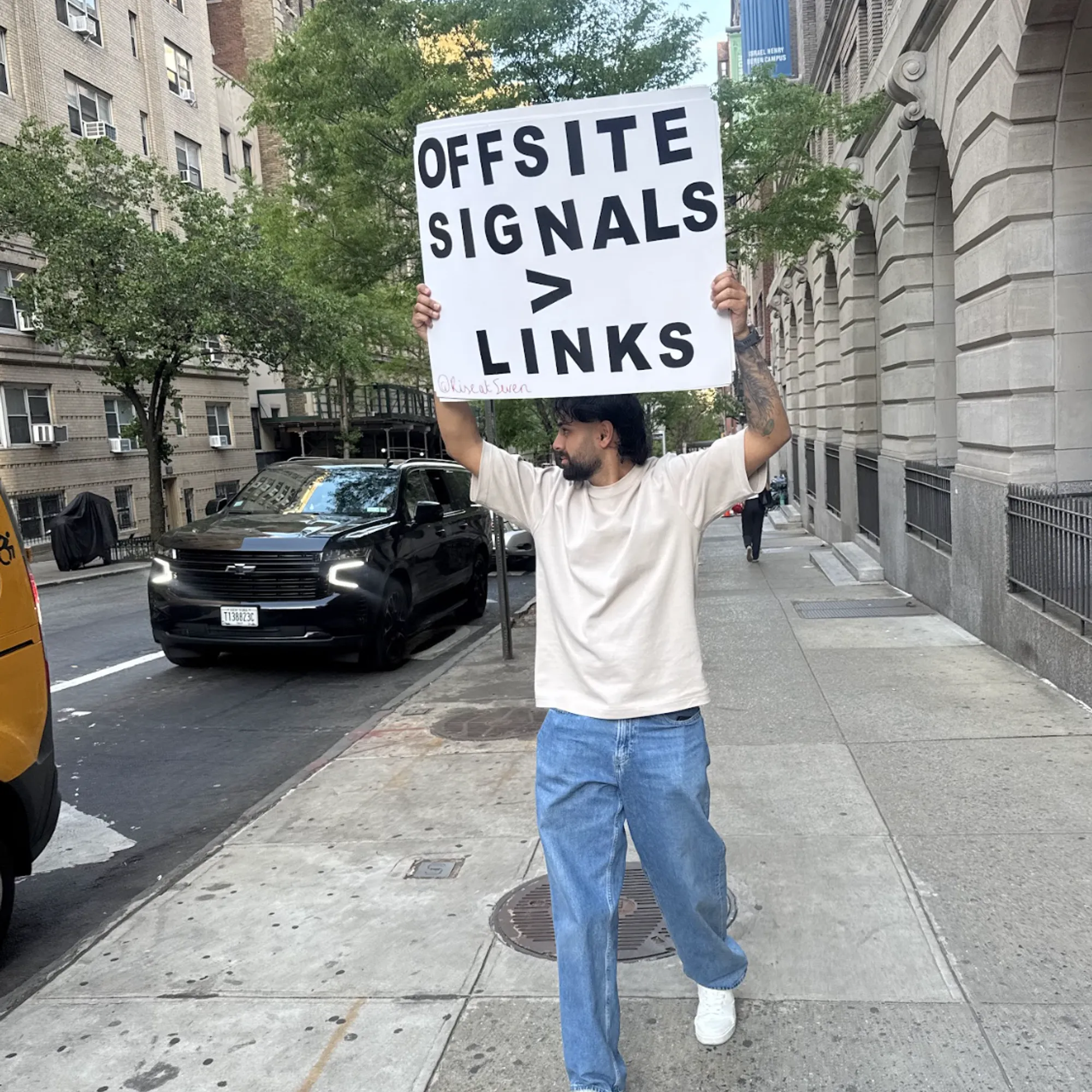
Technical SEO is the baseline. Offsite signals are the battleground.
One thing that came through clearly at Cannes, including across conversations at the Semrush Villa, is that SEO still matters enormously. A technically sound website, strong content structure, clear schema, useful content, fast performance. You need that foundation.
But AI visibility is not just traditional SEO with a new name.
Technical SEO is the housekeeping. The layer you need in place before you can compete properly. What actually shapes AI visibility is the wider web: media coverage, expert commentary, Reddit threads, creator content, YouTube videos, reviews, comparison pages, brand mentions and category associations.
If your website says one thing but the wider web says nothing, AI has very little to work with. If competitors are being mentioned, cited and discussed more consistently than you, they become easier to recommend.
One other line from the week I keep coming back to:
"A single viral campaign is a spike; compounding authority is a system."
That is exactly the framing brands need. You cannot do one campaign, get some coverage and call it done. AI systems are constantly learning. Prompts are constantly expanding. Sources are constantly being updated. The brands that win will not treat AI visibility as a three-month project. They will build an always-on engine.
We have already seen offsite signals work
This is not theory. We have seen it play out across client work.
Revolution Beauty is a strong example. Over five years, Rise helped build their position as the category leader for beauty dupes through always-on PR, product storytelling, search-led content and media visibility. That work delivered 1,486 media placements, a 2,015% increase in search demand and 73% share of voice in LLMs for beauty dupe keywords.
That is what happens when the wider web consistently reinforces the same brand story.
A leading eSim brand that we work with shows where this is heading. We were Appointed to make them the category leader for eSIM across the UK and Spain, Rise used offsite content, reactive PR and data studies to build 70% share of voice in LLMs for eSIM, 668 high-authority media links, 63% UK organic revenue growth and 50% UK branded search growth year on year.
Pooky is another. Using search insight, creators, paid social and PR to build demand for rechargeable lights, the campaign drove a 4,496% increase in search demand, 36.9k clicks in four weeks, a position two ranking above Amazon for "rechargeable lights" and 23% YoY revenue growth.
Discovery does not just capture demand. Done properly, it creates it.
Creators are no longer media buys. They are part of the discovery system.
Creators were everywhere at Cannes. On stages, on yachts, in brand spaces, in meetings. But the conversation has clearly matured.
This was not about follower counts or one-off paid posts. Creators are being treated as strategic partners. One line from a creator panel that really landed: "Creators aren't cowboys anymore. They're media companies with built-in distribution."
The best creators understand audience behaviour, retention, format, platform algorithms and community in a way many brands do not. Some understand attention better than the brands paying them.
From an AI visibility perspective, creator content matters more than ever. A creator post can shape brand awareness, drive search demand, rank in social search, influence Reddit conversations, appear in Google results, be cited by AI systems and move people from awareness to consideration. All at once.
PrettyLittleThing is a good example of this in action. We identified a product PLT already ranked for, then used 25 creators, product PR and trend-led content to build demand around "halterneck top." Searches increased by 841%, TikTok views hit 10 million, organic clicks reached 47k and the product sold out.
Creator content did not just drive engagement. It changed what people searched for.
Social search is part of how people discover and decide
One of the bigger structural shifts I kept thinking about at Cannes is how hard it now is to separate social search, creators and purchase behaviour.
A short-form video can be entertainment, search result, product discovery and conversion point in one. A comment section can shape how someone feels about a brand more than the brand's own campaign. A creator post can build awareness, trust and purchase intent simultaneously.
This is why social search matters, and why Parkdean is such a useful example. Their social content was performing, but not always reaching decision-makers. Rise repositioned the strategy around social search and buyer intent, helping them rank on TikTok for terms like "things to do in Newquay," "Lake Windermere," "caravan holiday" and "holiday parks."
Organic views grew from 1.5 million to 9.8 million. Sessions rose 92.5%. Transactions rose 94.5%. Revenue increased 152%.
Social was not just entertainment. It became discovery.
The next evolution leader-led brand building
Creators dominated this year. But I think the next wave will be leaders - this is something I learnt from Ash Jones founder of The Great Influence and Good Company
Steven Bartlett described company founders and executives as "the human shop window of your brand." That line stuck with me, because Cannes makes something very obvious: reputation matters. Who you are, your name, your face, your network, your thinking. Access at Cannes is driven by reputation. So is trust.
Brands are borrowing trust from creators. But many should also be building it through their own leaders. Founders, CEOs, CMOs and subject-matter experts have a significant role to play in brand credibility, particularly in B2B and high-consideration categories.
If creators are trusted because they feel human, leaders can achieve the same effect when they show up with consistent, useful, credible thinking. Thought leadership, LinkedIn, podcasts, panels, expert commentary. The future of brand is not faceless.
Measurement is becoming harder. The questions need to be better.
Measurement was another major theme. Not just more of it. Better.
One line captured the challenge: "Technology is giving us more answers than ever before. Our job is to ask better questions."
Because the lines between paid, organic, social, creators, search, PR and AI visibility are getting harder to separate. A PR mention can become an AI citation. A Reddit thread can shape brand perception before someone visits your site. A LinkedIn post from a founder can influence a sales conversation weeks later.
Channel-by-channel reporting misses the bigger picture. The better questions are:
Are more people searching for us?
Are we more visible in the category?
Are we showing up where decisions are made?
Are we being recommended by AI?
Are we being cited by trusted sources?
Are we building positive sentiment across the web?
That is why our Demand and Discovery model feels so relevant right now. The future is not about measuring activity. It is about measuring whether your brand is becoming more known, more trusted, more findable and more commercially effective.
The fundamentals still matter
One of the most grounding conversations at Cannes was hearing Byron Sharp and Mark Ritson in the same space, with the industry landing on some shared ground: mental availability, distinctive brand assets, reach, consistency and building memory before people are ready to buy.
The best reminder from the week: "Marketers think about their brand 8 hours a day; consumers think about it for 8 seconds."
We overestimate how much people care. Most people are not thinking about your brand. They are busy. They are distracted. The job is to be consistently visible, memorable and useful before the buying moment arrives.
That is where search-first marketing becomes powerful. Search behaviour shows what people actually care about, in their own words. And when brand activity increases search demand, that gives you a real behavioural signal that something is working.
Creativity felt slightly missing. But it is coming back.
For a festival built around creativity, Cannes felt tech-heavy this year. AI, platforms, data, creators, commerce and measurement dominated.
That reflects where the industry is. But I think creativity will come back stronger.
As AI becomes embedded, the advantage will not come from being able to produce more content. Everyone will be able to do that. The advantage will come from better ideas, better taste, better insight, better distribution and better understanding of human behaviour.
AI will force brands to become more creative, not less. Because when production becomes easier, originality becomes more valuable.
And "You still need people with excellent taste" might be the most quietly important thing said all week.
What Cannes means for Rise
Cannes validated a lot of what we have been building at Rise.
The industry is moving towards the space we already operate in: AI visibility, search-first strategy, Demand and Discovery, social search, digital PR as an offsite signal, Reddit and community, creator-led discovery, leader-led brand building, category ownership and cross-channel measurement.
The opportunity is to keep sharpening how we talk about it and keep proving it with client results.
The brands that win the next era will not just be the ones with the biggest budgets. They will be the ones with the most consistent, credible and connected presence across the places people and AI systems trust. The ones that understand that visibility is no longer built in one channel.
It is built everywhere.
The one thing
If I had to sum up my first Cannes in a single thought, it is this:
AI is not replacing creativity, relationships or brand. It is making all of them more important.
AI is changing how people discover brands. Creators are changing who people trust. Communities are changing where sentiment is formed. Leaders are becoming more important in how brands build credibility.
The opportunity for brands is not to chase every new platform or trend. It is to build a consistent visibility engine that makes them known, trusted, recommended and easy to choose.
That is the work.
And after my first Cannes, I am more convinced than ever that this is exactly where Rise at Seven should be playing.
Written By
Ray Saddiq
Global Head of Marketing
Mon 15 Jun
Ray Saddiq is a leading voice in the world of Marketing SEO and social media known for connecting the dots between how people search and how they scroll. As Head of Marketing at Rise at Seven, he’s pioneered approaches that treat platforms like TikTok, Pinterest, and Instagram not just as content channels but as search engines.