ChatGPT has reached 900 million weekly active users, Google's AI Overviews appear on more than 20% of searches, and 68% of US Google searches now end without a single click to a website.
Answer Engine Optimisation (AEO) - earning citations inside AI-generated answers, has become a visibility requirement, not an experiment. Otherwise known as GEO/AI SEO
Yet only 20% of marketing teams have started implementing it.
Here are the latest AEO/GEO/AI SEO statistics on LLM search usage, zero-click behaviour, citation patterns, referral traffic, and what actually increases AI visibility.
AEO/GEO/AI SEO Statistics 2026 (Top Picks)
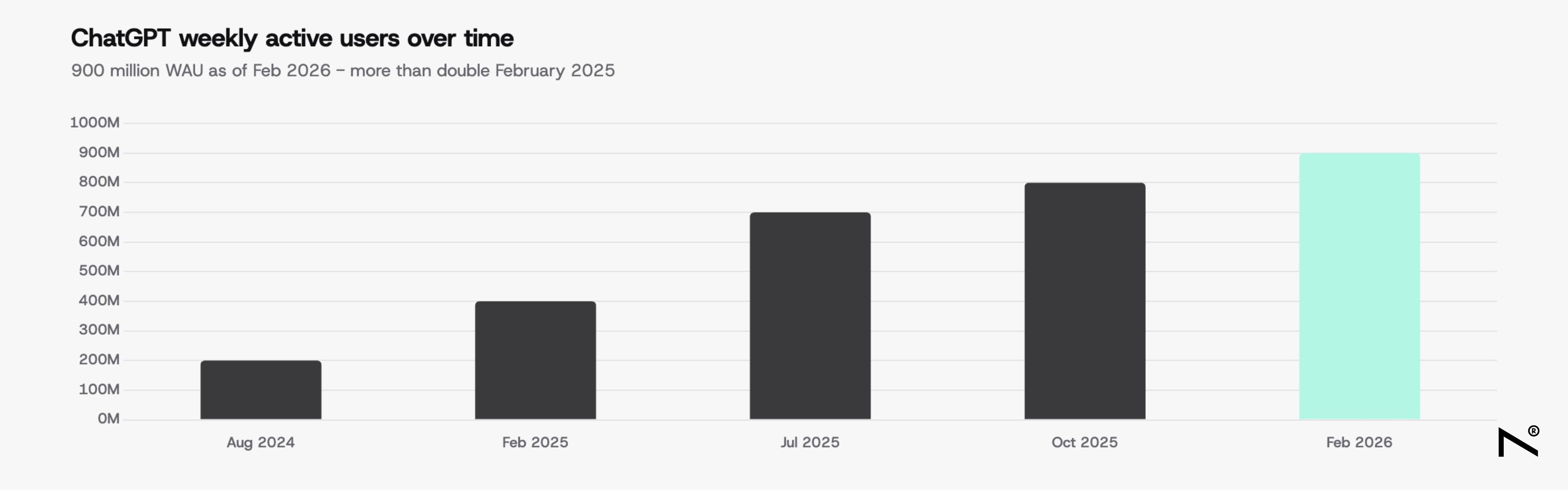
ChatGPT has 900 million weekly active users, up from 400 million a year earlier.
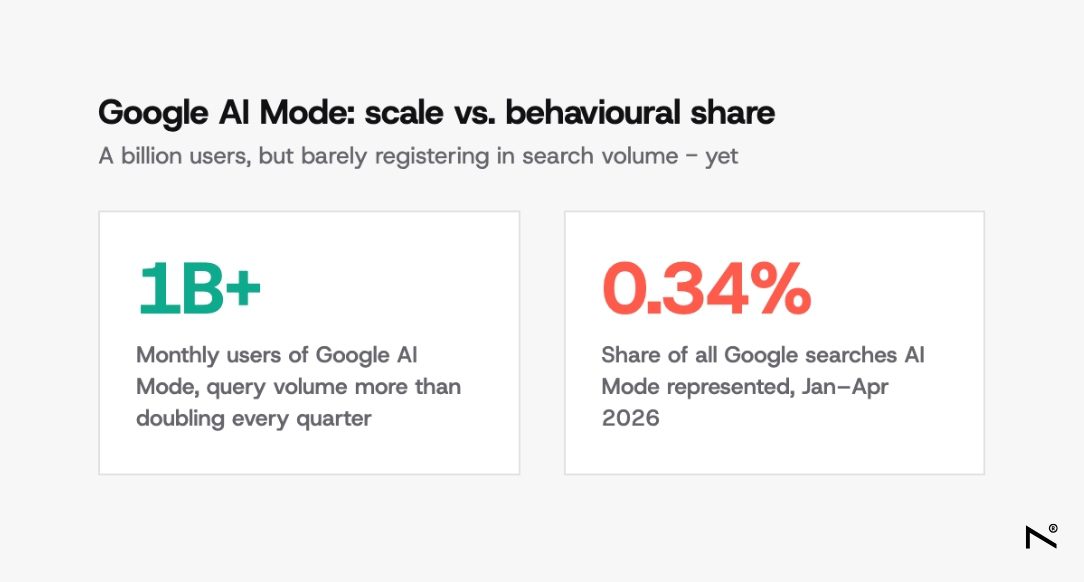
Google AI Mode passed 1 billion monthly users, with query volume more than doubling every quarter.
AI Overviews now appear on 20%+ of Google searches — and click-through rates drop by nearly 60% when they do.
68% of US Google searches end without a click to any website.
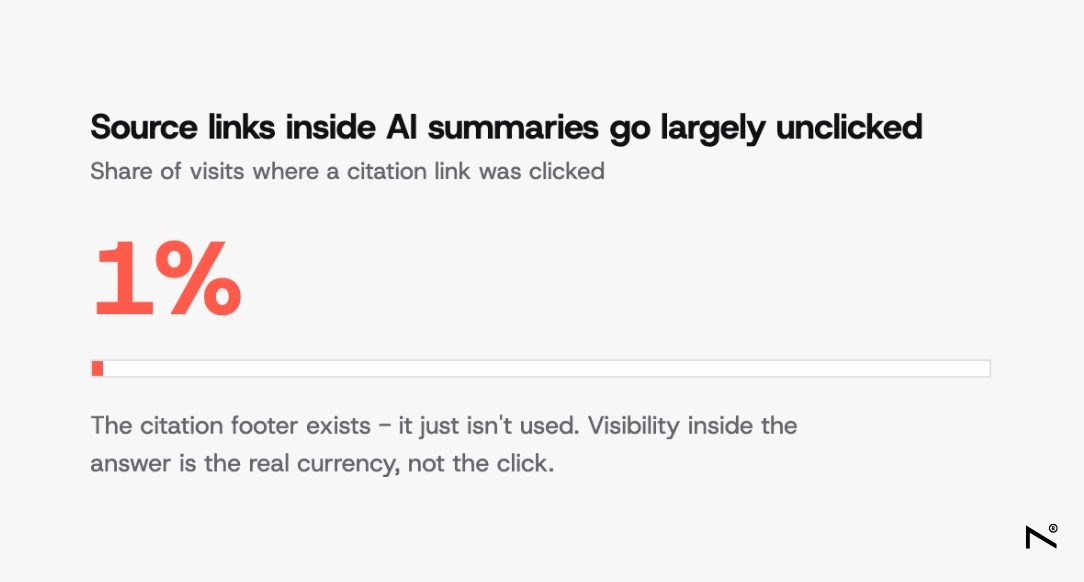
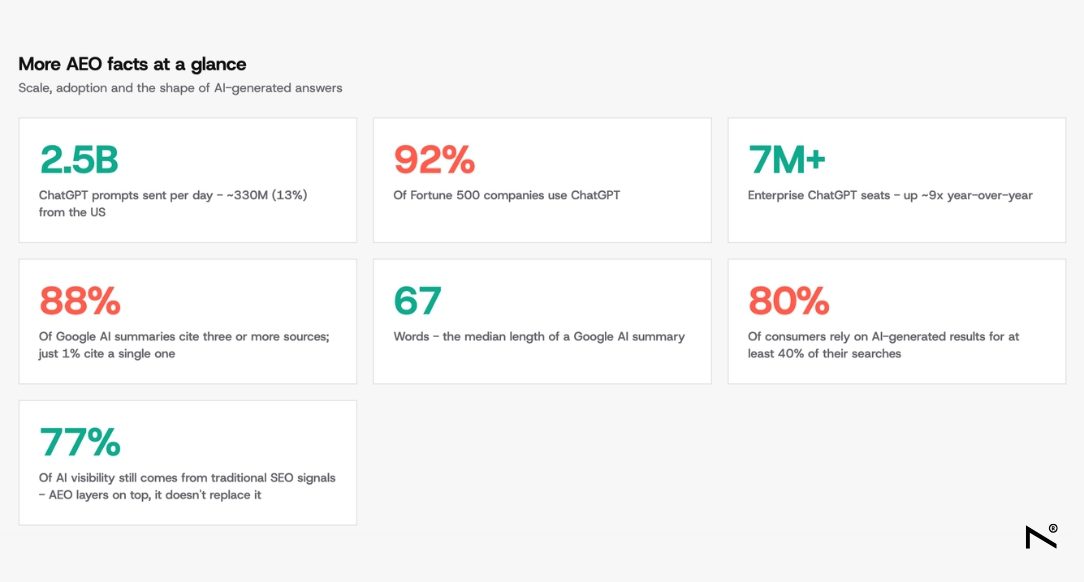
Only 1% of users click a source link inside a Google AI summary.
ChatGPT referral traffic to websites grew 206% year-over-year.
Content optimization techniques can boost AI citation visibility by up to 40% (Princeton GEO study).
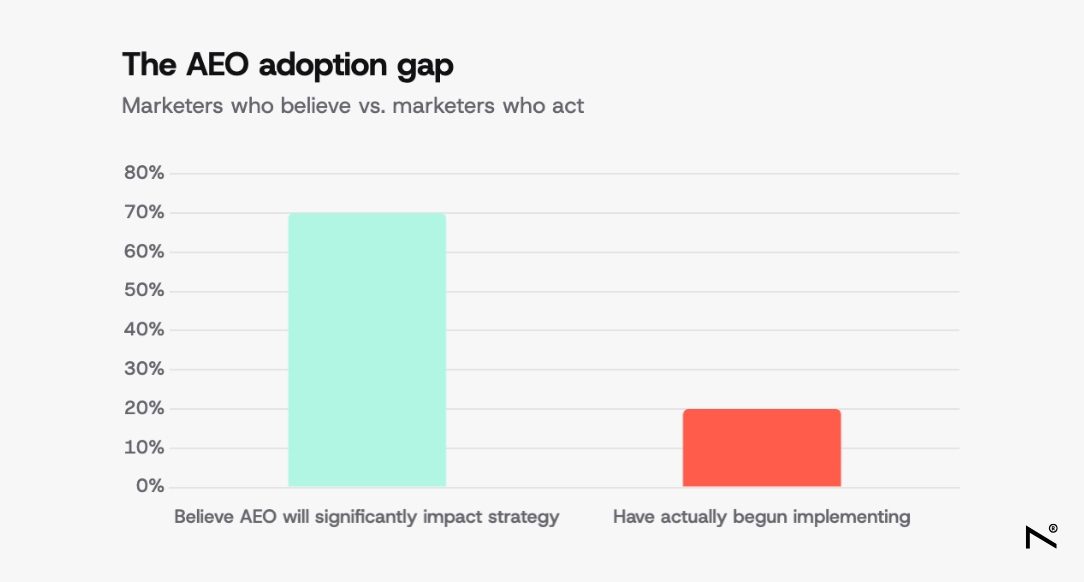
70% of marketers believe AEO will significantly impact their strategy within 1–3 years - but only 20% have begun implementing it.
How Many People Use AI Search?
1) ChatGPT Has 900 Million Weekly Active Users
OpenAI reported that ChatGPT passed 900 million weekly active users in early 2026 - more than double the 400 million reported in February 2025. By June 2026, Reuters reported the app had reached 1 billion monthly active users, the fastest app in history to reach that milestone.
ChatGPT now processes roughly 2.5 billion prompts per day.
2) Google AI Mode Has Passed 1 Billion Monthly Users
Google announced at I/O 2026 that AI Mode, its fully generative search interface, surpassed 1 billion monthly users, with query volume more than doubling each quarter.
For context: clickstream data from January–April 2026 showed AI Mode at just 0.34% of all Google searches during that window, meaning the behavioural impact of AI Mode has barely begun.
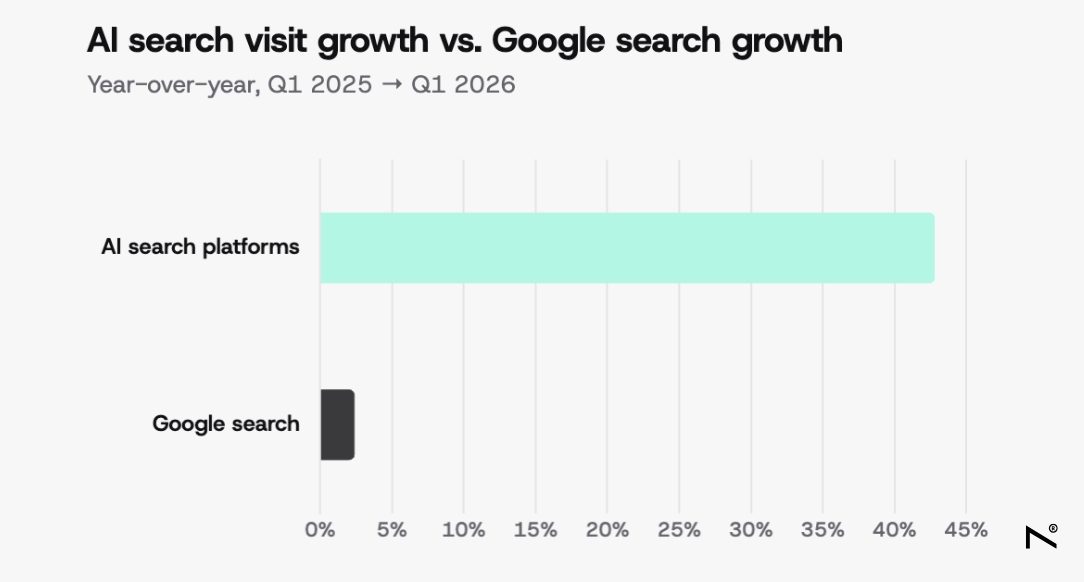
3) AI Search Visits Grew 42.8% Year-Over-Year — Google Grew Just 2.4%
Between Q1 2025 and Q1 2026, visits to AI search platforms climbed from 15.6 billion to 27.4 billion - a 42.8% increase. Over the same window, Google search visits grew 2.4%.
The absolute gap is still enormous, but the growth-rate gap is the story: attention is compounding toward answer engines.
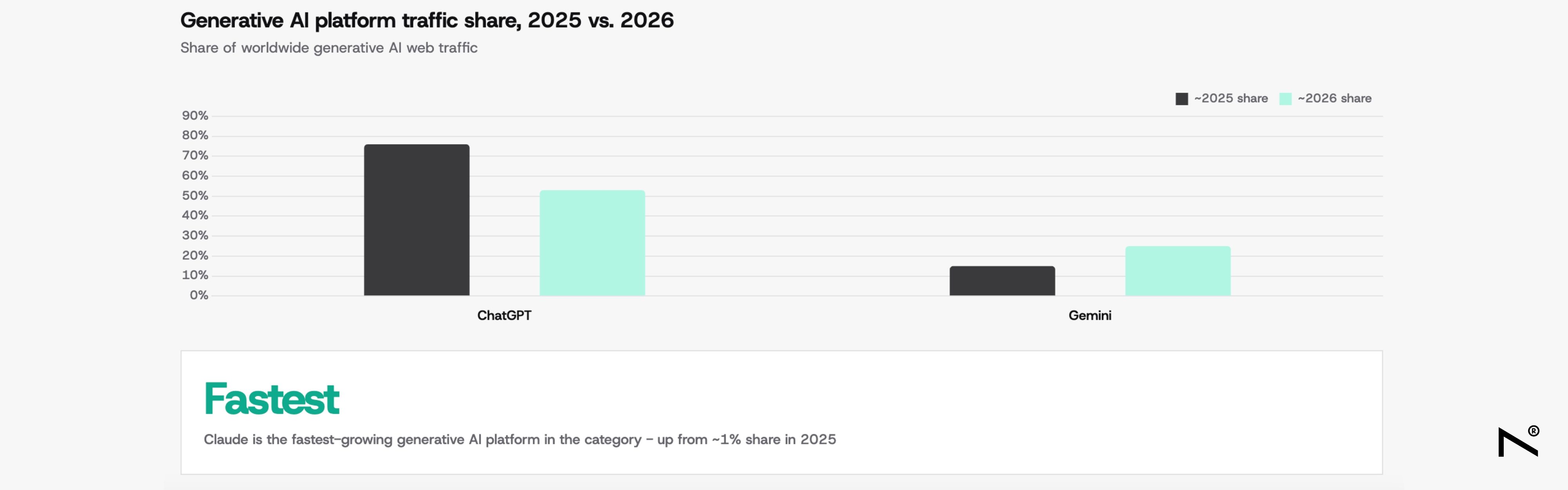
4) ChatGPT's Share Of Generative AI Traffic Has Fallen From 76% To ~53%
AEO is no longer a one-platform game. Similarweb's 2026 Generative AI Landscape data shows ChatGPT's share of worldwide generative AI web traffic declining from roughly 76% a year ago to around 53%, while Gemini has climbed past a quarter of all traffic and Claude has become the fastest-growing platform in the category.
Optimising for a single AI platform used to cover most of the addressable audience. It no longer does.
Generative AI platform traffic share (2026 vs 2025):
5) AI Overviews Appear On More Than 20% Of Google Searches
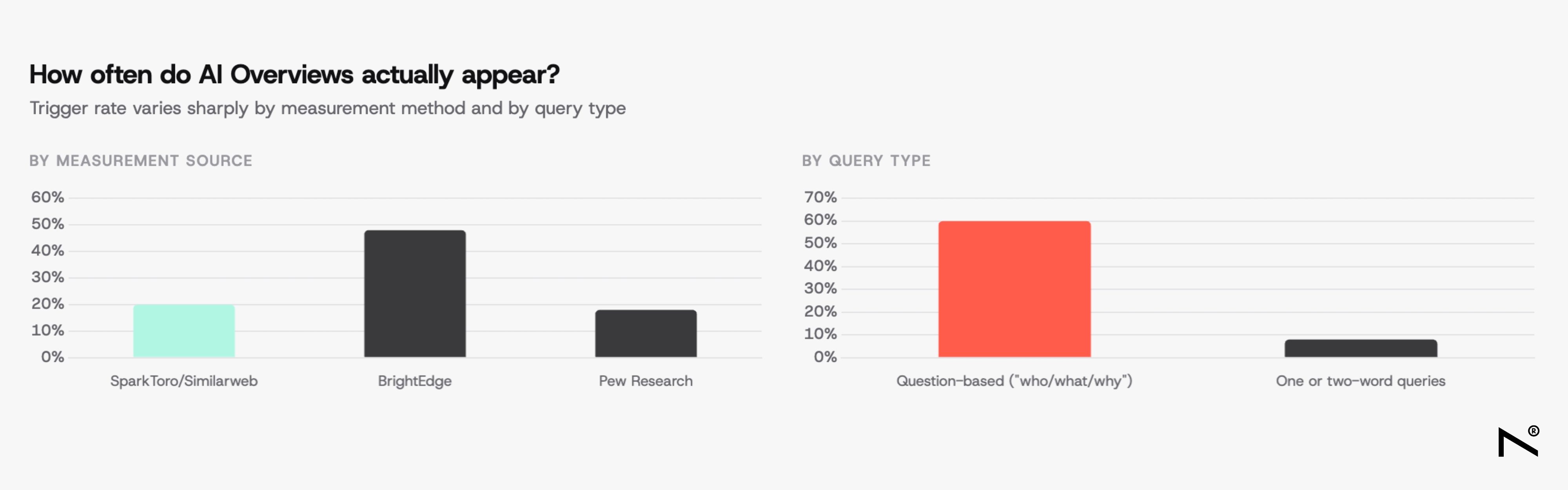
According to the June 2026 SparkToro study (using Similarweb clickstream data), AI Overviews now appear on more than 20% of Google searches - and the percentage is still growing.
Note: Figures vary by methodology. BrightEdge, which tracks a different query set, reports AI Overviews triggering on approximately 48% of tracked queries as of February 2026 - a 58% year-over-year increase. Pew Research measured 18% of real-user searches triggering a summary in March 2025. The trigger rate depends heavily on query type: Pew found question-based searches ("who", "what", "why") generated AI summaries 60% of the time, versus 8% for one- or two-word searches.
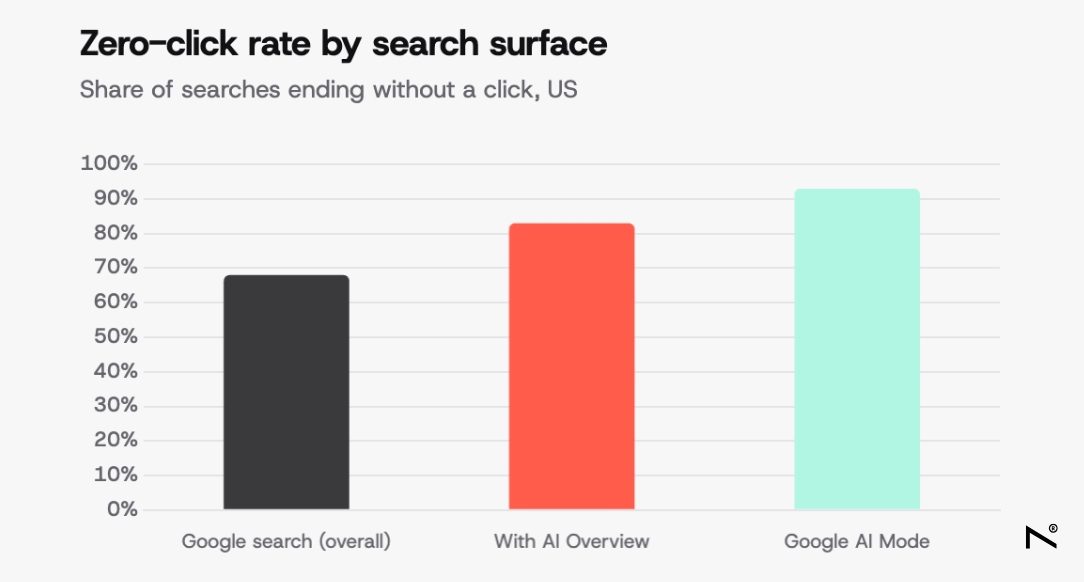
The 2026 SparkToro/Similarweb study found that 68% of US Google searches now end without a click to any website - up from roughly 45% a decade ago, with the steepest acceleration in the last two years.
When an AI Overview is present, the zero-click rate rises to approximately 83%. In Google's AI Mode, it reaches 93%.
7) Users Click A Result Only 8% Of The Time When An AI Summary Appears
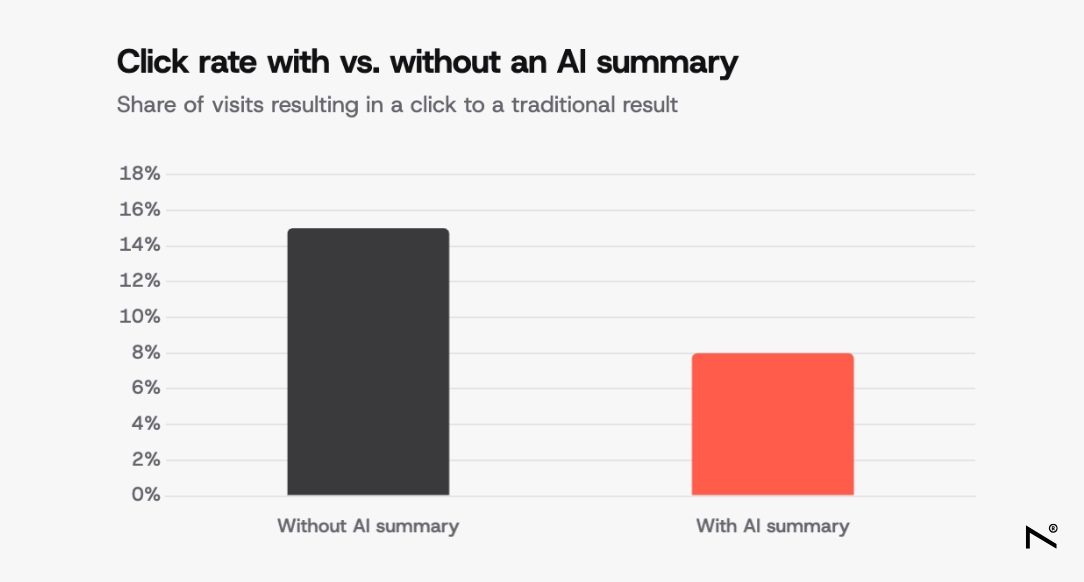
Pew Research Center tracked the real browsing behaviour of 900 US adults across 68,879 unique Google searches. When an AI summary appeared, users clicked a traditional result in just 8% of visits - nearly half the 15% click rate on pages without one.
Users were also more likely to end their browsing session entirely after encountering an AI summary (26%) than without one (16%).
8) Only 1% Of Users Click A Source Link Inside An AI Summary
The same Pew study found that source links inside Google's AI summaries were clicked in just 1% of visits. The citation footer exists - it just isn't used.
The implication for AEO: the value of being cited is increasingly brand visibility inside the answer itself, not the click. Share of voice in AI answers is the metric, not referral sessions alone.
9) AI Overviews Cut Top-Ranking Organic CTR By 58%
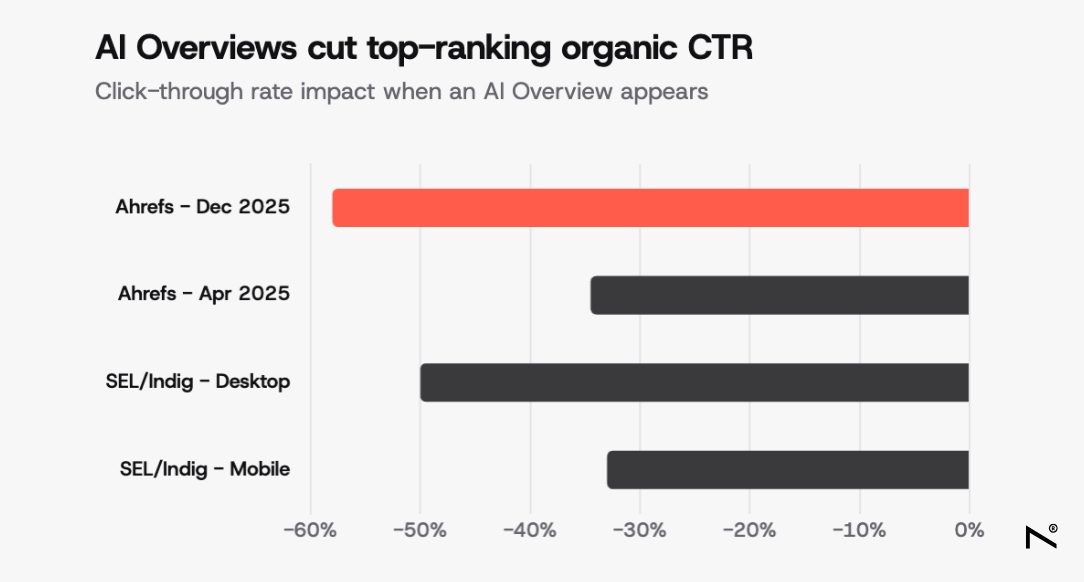
Ahrefs' December 2025 analysis of ~300,000 keywords found AI Overviews reduce position-one organic CTR by 58%. Their April 2025 study, using identical methodology, found 34.5% suppression - meaning the effect nearly doubled within a year.
10) Gartner Predicted A 25% Drop In Traditional Search Volume By 2026
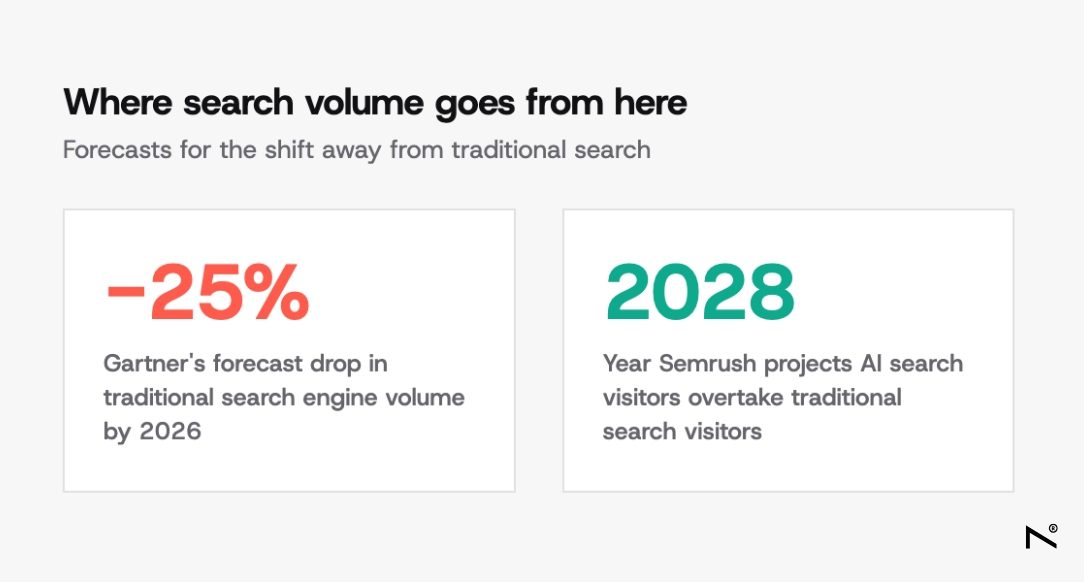
Gartner forecast in 2024 that traditional search engine volume would fall 25% by 2026 as behaviour shifts to AI chatbots and agents. Semrush projects AI search visitors will overtake traditional search visitors by 2028.
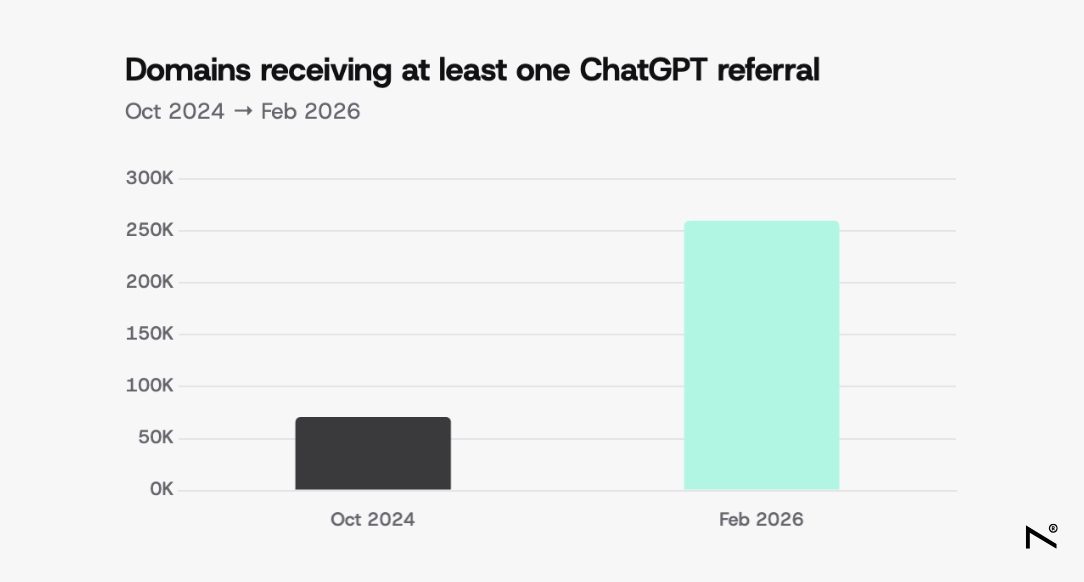
Semrush and Datos analysed 1 billion clickstream data points from US users between October 2024 and February 2026. Referral traffic from ChatGPT to external websites grew 206% year-over-year (Jan 2025 vs Jan 2026), and the number of domains receiving at least one ChatGPT referral rose from 71,000 to up to 260,000.
Concentration warning: 30% of all referrals go to just 10 domains, a power-law pattern reminiscent of organic search.
12) ChatGPT Referral Traffic Hit An All-Time High In May 2026, Jumping 36.7% In One Month
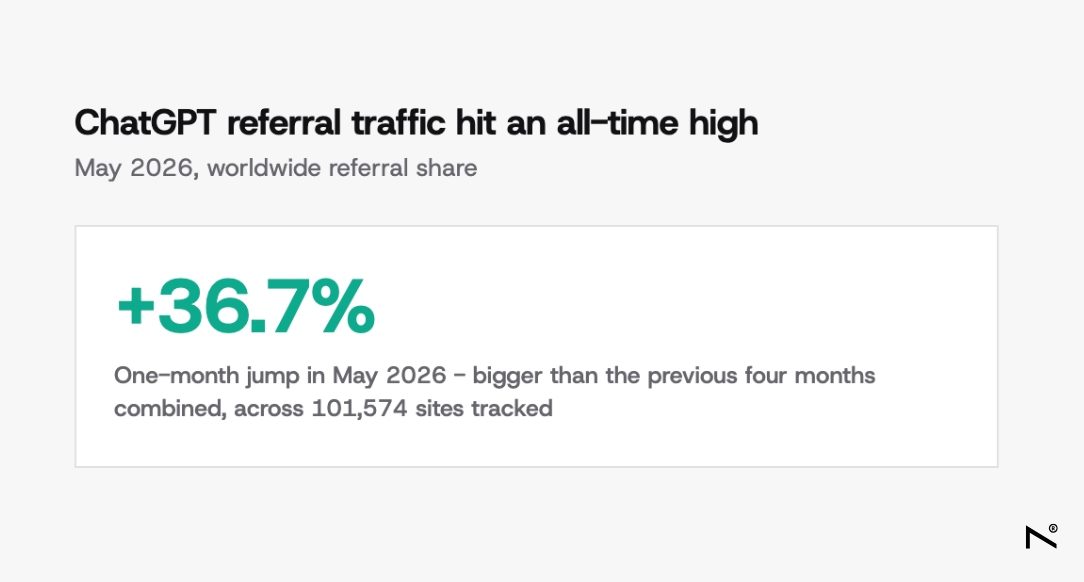
SE Ranking's analysis of 101,574 websites found ChatGPT's worldwide referral share jumped 36.7% in May 2026 alone - a bigger move than the previous four months combined, reaching its highest recorded level.
13) AI Referrals Still Account For Only ~1% Of Total Website Traffic
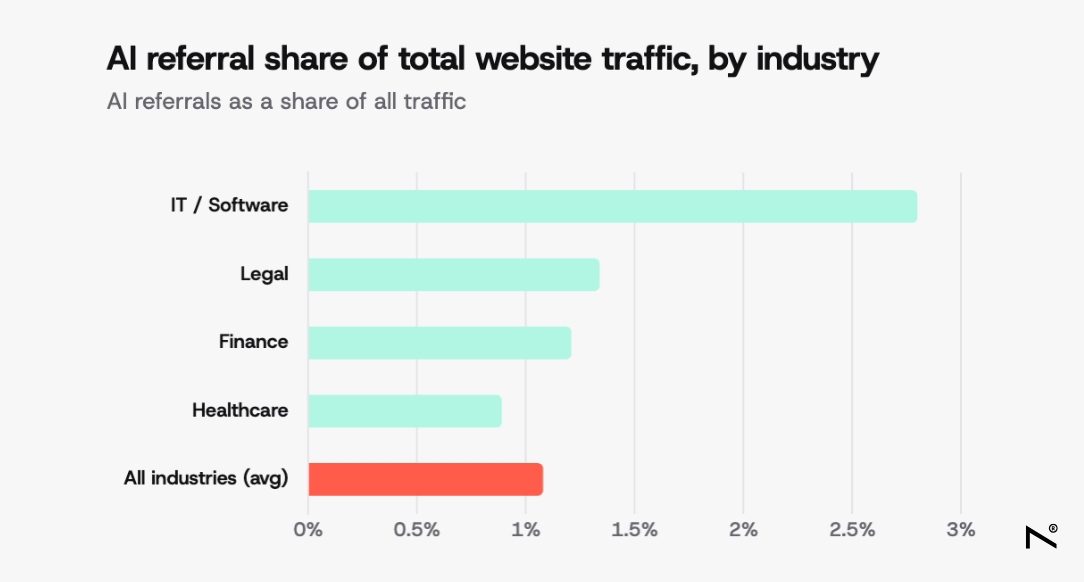
Across published studies, AI referrals account for between 0.1% and 2.8% of total website traffic depending on industry, with Conductor placing the average at roughly 1.08% - growing approximately one percentage point month-over-month.
Small base, unmatched growth rate. The honest framing is both.
14) AI Referral Traffic To US Retail Sites Grew 693% - And Converted 31% Better
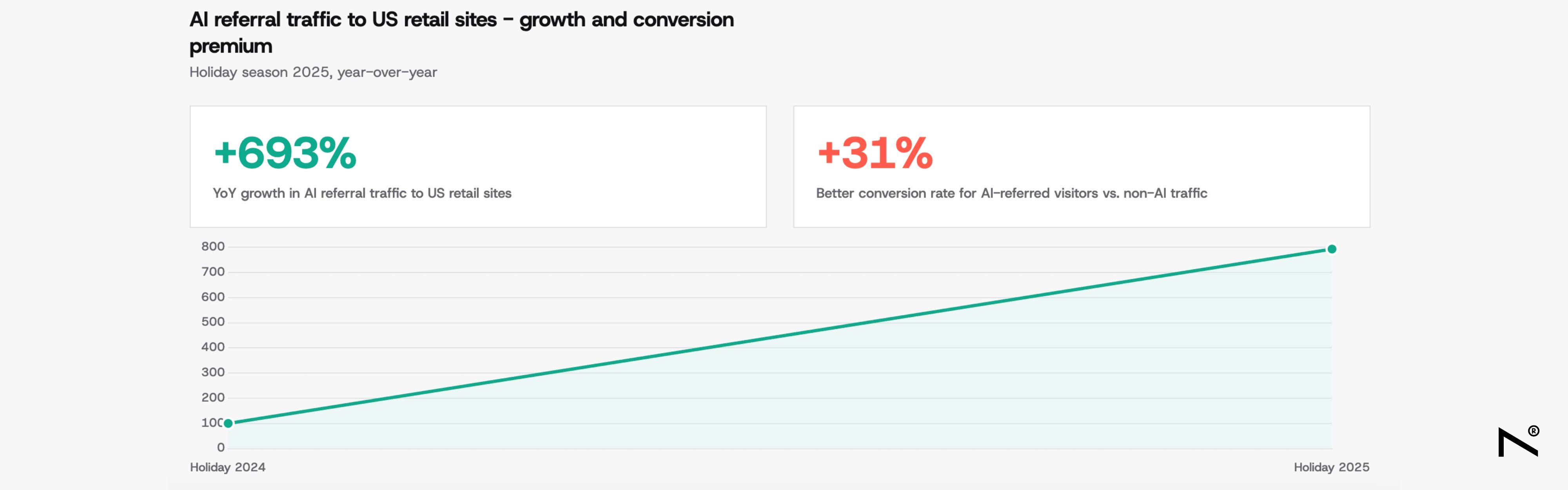
Adobe Digital Insights measured a 693% year-over-year increase in AI referral traffic to US retail sites during the 2025 holiday season. Those AI-referred visitors converted 31% better than non-AI traffic.
This is the stat that reframes the "AI traffic is tiny" objection: the sessions are few, but they arrive pre-qualified - the AI already did the research phase.
15) Reddit Is The #1 Cited Domain Across AI Engines
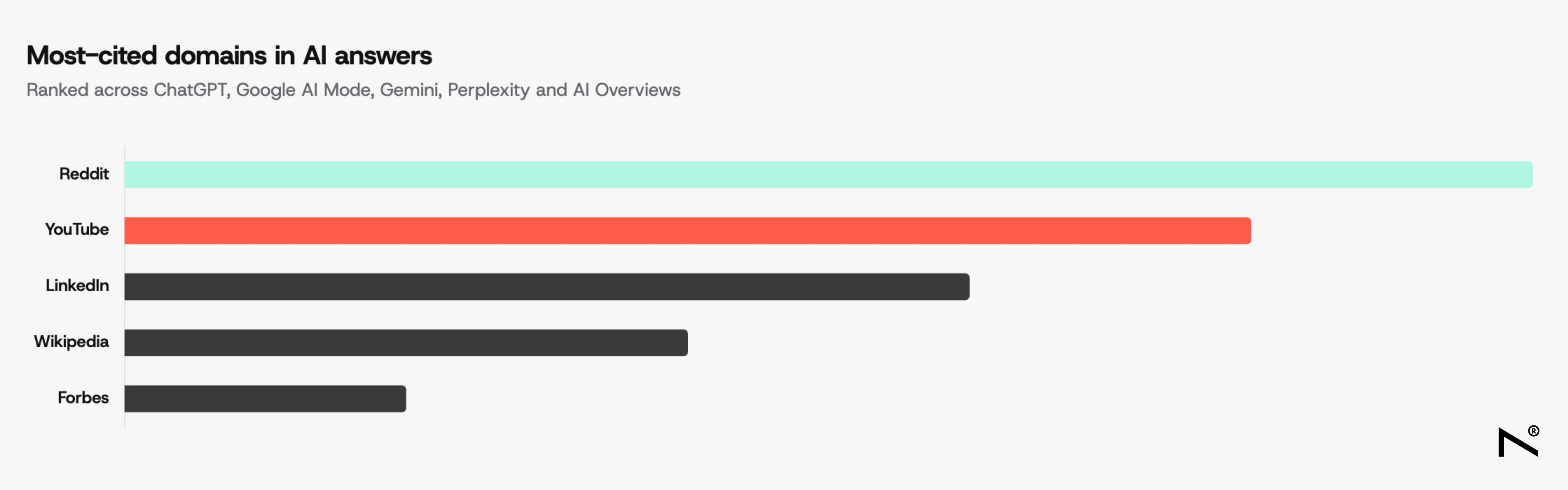
Peec AI's analysis of 30 million sources found Reddit was the most-cited domain across ChatGPT, Google AI Mode, Gemini, Perplexity and AI Overviews, with YouTube, LinkedIn, Wikipedia and Forbes rounding out the top five.
5WPR's consolidated Citation Source Index (synthesising 680M+ citations across six studies) found the top 15 domains capture 68% of all consolidated AI citation share, a concentration more extreme than PageRank ever produced.
16) YouTube Has Overtaken Reddit In AI Citation Share
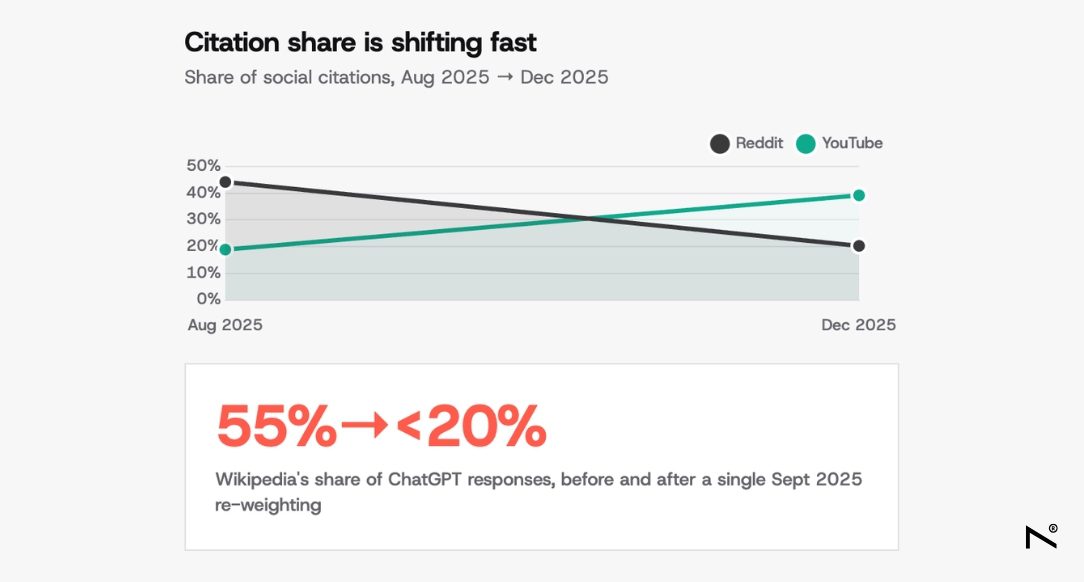
The citation landscape is volatile. Goodie AI's analysis of 6.1 million citations shows YouTube's share of social citations doubling from 18.9% in August to 39.2% in December, while Reddit's share fell from 44.2% to 20.3%. Semrush's 13-week tracking of 230,000+ prompts also recorded Wikipedia dropping from ~55% of ChatGPT responses to under 20% in a single September adjustment.
The AEO takeaway: citation share is not stable. Platforms re-weight sources deliberately (partly to resist manipulation), which means visibility must be monitored continuously, not audited annually.
Source: Goodie AI / Bluefish / Emberos data via eMarketer, Semrush
17) Each AI Platform Has A Distinct Citation Personality
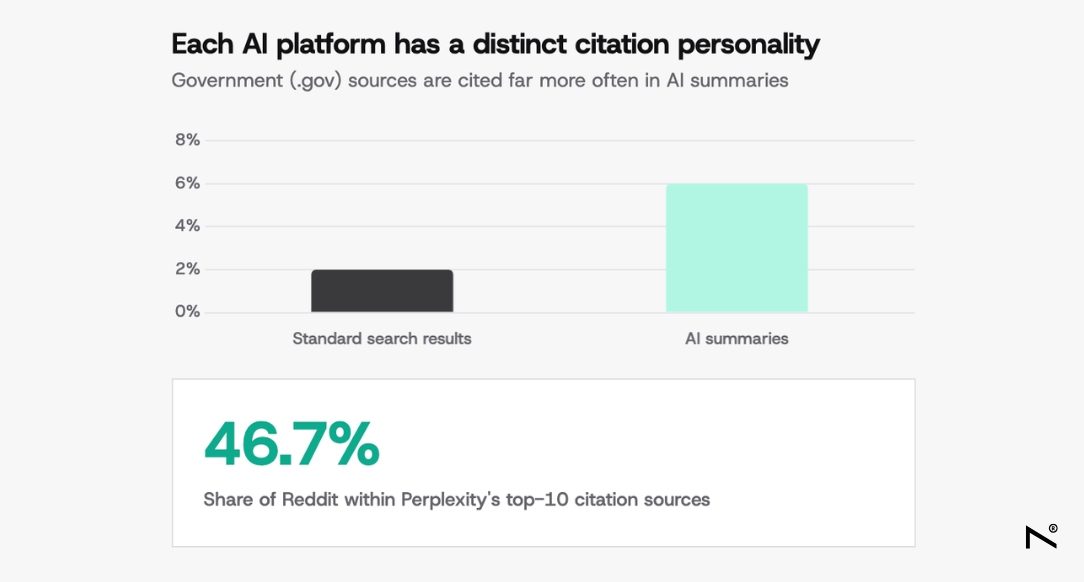
Profound's analysis of 680 million citations (Aug 2024–Jun 2025) found ChatGPT favours Wikipedia and encyclopedic content, Perplexity concentrates heavily on Reddit and community content (Reddit accounted for 46.7% of Perplexity's top-10 citation sources), and Google AI Overviews distribute citations more broadly, leaning on Google-owned surfaces.
Pew's data adds one more wrinkle: government (.gov) sites are cited 3x more often in AI summaries than in standard search results (6% vs 2%), AI engines over-index on institutional authority.
What Actually Increases AI Citations? (GEO/AEO Effectiveness Stats)
18) Targeted Optimisation Can Boost AI Citation Visibility By Up To 40%
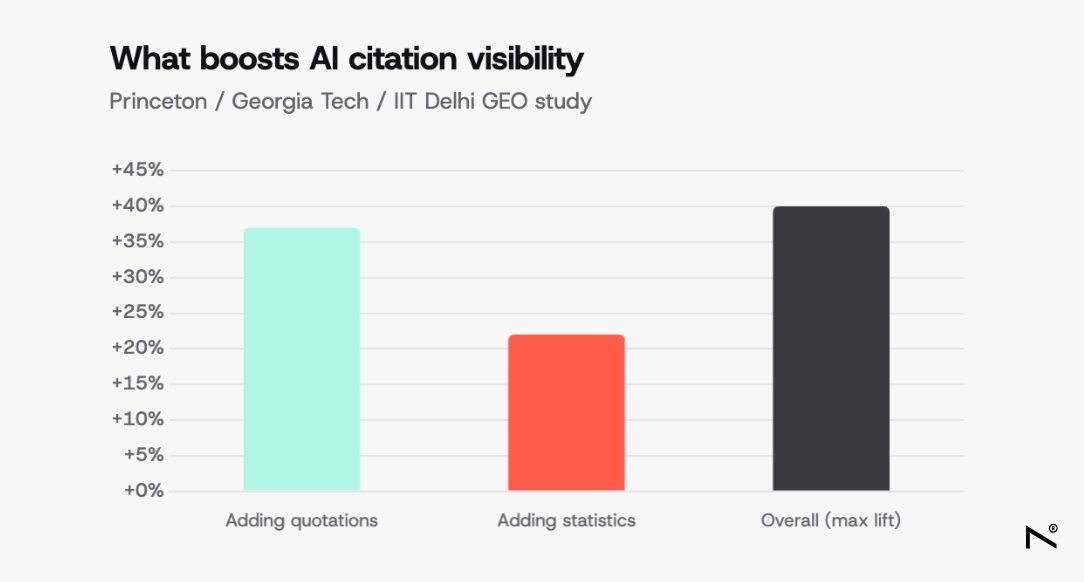
The foundational academic study for AEO, the Princeton / Georgia Tech / IIT Delhi GEO paper (Aggarwal et al., presented at ACM KDD 2024), tested nine optimisation methods across 10,000 queries and found targeted techniques can improve a source's visibility in AI answers by up to 40% (a maximum on the study's position-adjusted visibility metric, not an average).
Among the strongest levers reported: adding quotations (visibility lift of 37%) and adding statistics (22%). Evidence-rich content wins citations.
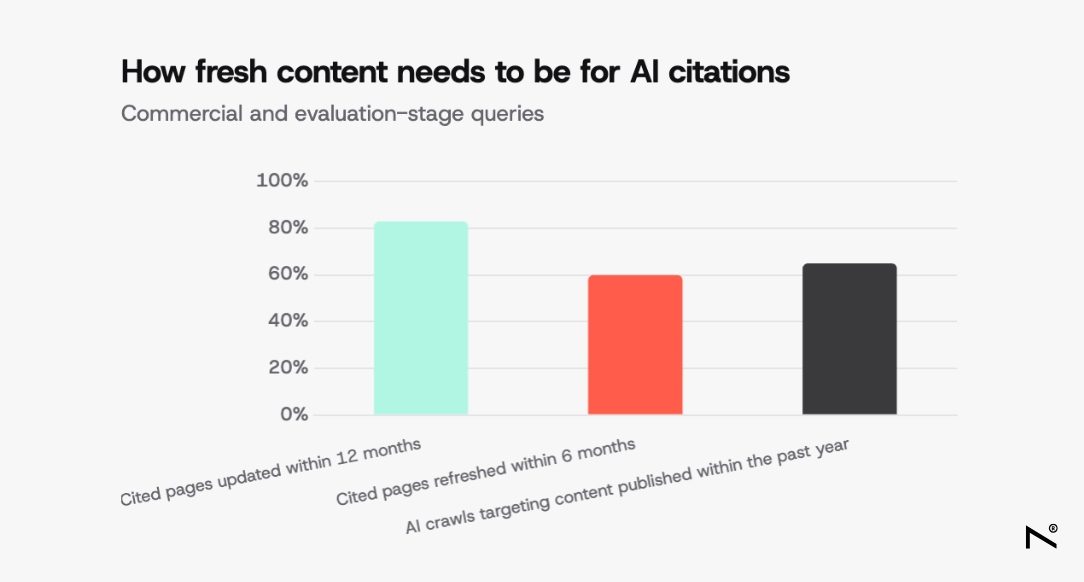
19) 83% Of AI Citations For Commercial Queries Go To Pages Updated In The Last 12 Months
AirOps' 2026 State of AI Search Report, analysing citation patterns across ChatGPT, Perplexity, AI Overviews and Gemini, found that for commercial and evaluation-stage queries, 83% of AI citations came from pages updated within the past 12 months - and more than 60% from pages refreshed within the last six months.
Roughly 65% of AI bot crawls target content published within the past year. Freshness is a citation ranking factor.
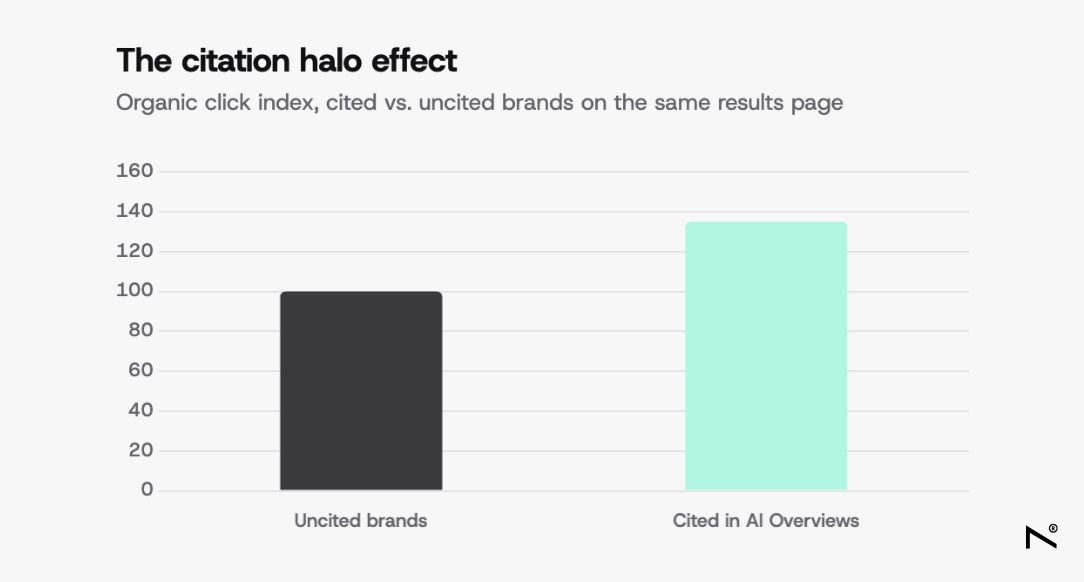
20) Brands Cited In AI Overviews Earn 35% More Organic Clicks
Analysis of AI Overview citation data indicates brands cited within AI Overviews earn approximately 35% more organic clicks than uncited brands appearing on the same results page - a citation halo effect on traditional listings.
21) 70% Of Marketers Believe In AEO - Only 20% Are Doing It
Acquia and Researchscape surveyed 500+ marketing professionals across the US and UK: 70% believe AEO will significantly impact their digital strategy within 1–3 years, but only 20% have begun implementing it.
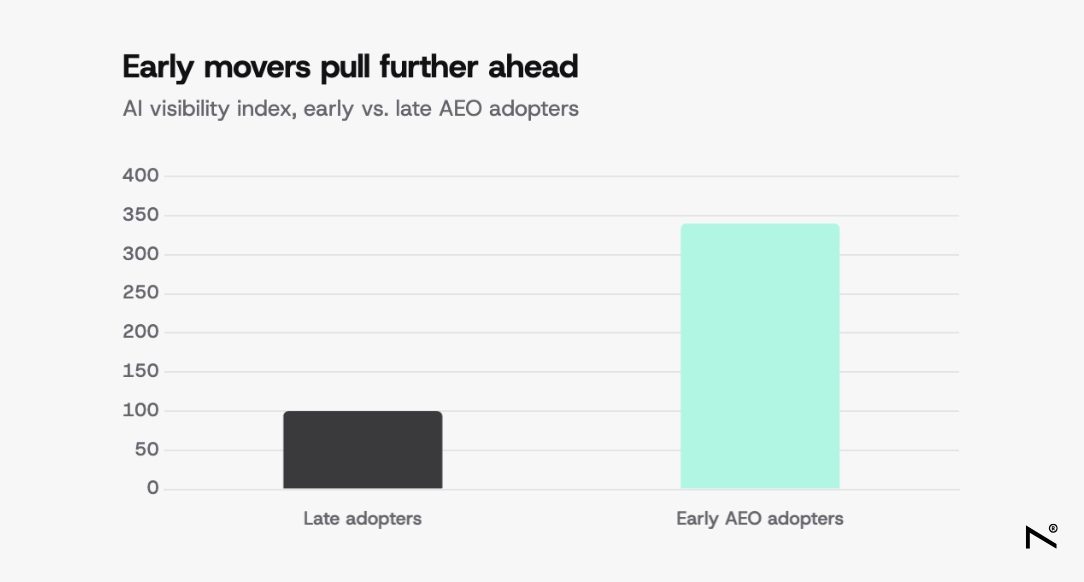
22) Early AEO Adopters Capture 3.4x More AI Visibility
Analysis of early-vs-late adoption patterns found early AEO adopters capturing 3.4x more AI visibility than late adopters - consistent with how citation share concentrates (top 15 domains = 68% of citations). AI answers compound incumbency: cited sources get re-cited.
Sources: OpenAI/TechCrunch/Axios, SparkToro/Similarweb, Pew Research Centre, Bain & Company, Conductor
Conclusion: AI Answers Now Mediate The Majority Of Search Journeys
With 900 million weekly ChatGPT users, 1 billion AI Mode users, AI Overviews on 20%+ of Google searches and 68% of searches ending without a click, the answer layer - not the results page - is where visibility is now won.
The data points to a clear playbook: evidence-rich content (quotes +37%, stats +22%), refreshed within 12 months, distributed across the platforms AI engines actually cite (Reddit, YouTube, LinkedIn, editorial press) - measured by share of voice in AI answers, not clicks alone. And with only 20% of teams implementing AEO against 70% believing in it, the window to become a default citation is open but closing.
Written By
Carrie Rose
Founder
Wed 12 Aug
AEO Search
CEO & Founder of Rise at Seven, and my job is to be out in the market and see which way the wind is blowing in the next 1, 2, 5 or 10 years time and bring that home to my team and clients. I lead the vision of the agency across the UK & US.