If I was a CMO, this is how I would budget for GEO/AI search in 2027
AEO Search
Share
GEO has earned a place in the marketing budget. But everyone is questioning how much to invest, where that spend should go and where it should come from.
I speak at some of the biggest SEO events in the world, from SEO Week NYC and SEMrush Spotlight to Ahrefs Evolve and BrightonSEO. And I can tell you one of the biggest problems brands and SEO teams raise is knowing how to fund GEO/AI search.
And time is ticking. It's budget planning season, so I'm going to help.
The questions I keep hearing are:
If organic traffic is declining, should I be spending more on SEO or less?
Should the GEO budget come out of SEO, or should it be funded by other disciplines like brand and PR?
Who is responsible for the GEO budget and its ROI?
In this guide, I will answer the above questions. This guide will also cover:
Whether marketing budgets are increasing or decreasing statistics in 2026/2027
How to split the budget and where it should come from
Activity breakdown and the role across PR, Social, Onsite and Brand
*** i'll interchange between AI search/GEO/AEO but essentially they're the same thing
The state of play: Are C-suites spending more or less on marketing?
Let's be honest. C-suites are trying to get more from less. Always.
And the data backs this up.
Marketing spend statistics 2026/2027
2026 marketing budget statistics show:
In the UK, 63% of companies reported unchanged marketing budgets in Q3 2026, according to the IPA Bellwether Report.
In the US, marketing spending grew by just 1.7% over the previous 12 months, according to The CMO Survey.
Looking towards 2027...
the UK advertising market is forecast to grow by just 1.3%, while US marketers anticipate 7.6% marketing budget growth over the following 12 months.
These are different measures, but both illustrate the pressures shaping planning.
Meanwhile, Gartner reports that 56% of CMOs feel they don't have enough budget to deliver their existing marketing strategy.
Yet we're asking brands to find even more money for AI search.
My argument? We don't necessarily need bigger budgets. We need to rethink how we're allocating them.
So how should you budget for AI search in 2027?
The way consumers find, research and choose brands has DRASTICALLY changed. So, in my opinion, the way we distribute marketing investment needs to change too.
AI search/GEO is now a critical part of the discovery journey. And the C-suite shouldn't just be thinking about 2027. They should be thinking about what discovery will look like over the next five years.
The brands winning AI visibility won't necessarily be the ones with the biggest SEO teams. They'll be the brands with integrated teams building consistent signals around their products, expertise, audiences and brand positioning.
That means technical SEO, content, digital PR, social search, influencers and brand working together.
My recommendation: Start with a minimum of 8-10%.
For large and enterprise brands, I'd recommend allocating at least 8-10% of the existing marketing budget towards GEO/AEO/AI search.
And I genuinely don't believe investing less than 8-10% will deliver the sustained improvements in AI visibility that most large brands need to compete.
That's my strategic recommendation based on the scale of the opportunity and the work required across multiple disciplines. It's not a scientifically proven threshold.
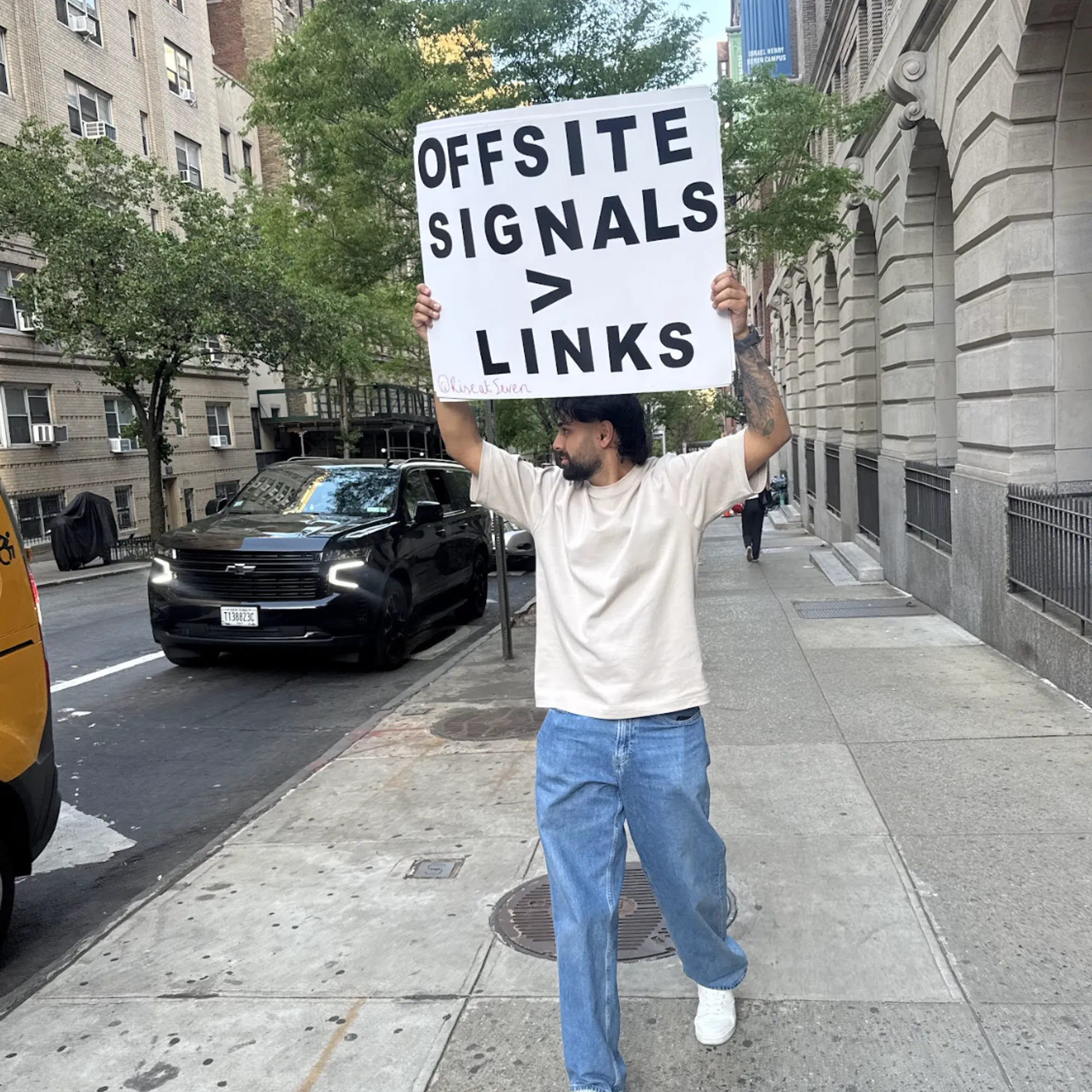
Here I am at SEMrush spotlight talking about this exact topic
Carrie talking at SEMRUSH Spotlight
But here's the important distinction.
Roughly, 10% is the baseline, not the final allocation.
Simply… I'd start by ring-fencing 10% of each existing marketing discipline - pulling it from PR, SEO, social, content and brand - towards AI search initiatives. I'm not suggesting an additional 10% on top of the marketing budget, or taking 10% from SEO alone.
I'm suggesting reallocating existing investment.
And once we've researched the category, competitors and sources influencing AI recommendations, I'd adjust those percentages. Some disciplines might need 20%. Others might need less.
First, understand where AI gets its information to inform your percentage weighting.
Profound analysed 11.84 billion AI citations across 29 industries and found that the sources referenced by AI platforms vary significantly between categories.
A separate Profound citation-category analysis illustrates those differences:
Where AI gets its information, by industry
Profound citation-category study. Percentages are shares of AI citations, rounded; rows may differ slightly from 100%
Important: Brand/corporate sites include your website, competitors' websites and other company-operated domains. Media includes news, editorial reviews and comparison publishers. The institutional category includes research and public-interest sources.
What would I actually do with this information?
I'd identify the commercially valuable prompts consumers are asking in my category, analyse the brands being recommended and collect the sources being cited.
I'd then classify those sources into owned websites, competitors, publishers, social platforms, communities and other authoritative sources.
And I'd use that information to identify where we're underrepresented.
But I wouldn't simply replicate citation percentages in my marketing budget.
If 30% of AI citations come from media, that doesn't automatically mean 30% of your budget should go to PR.
A citation doesn't necessarily prove that a source caused a recommendation, and citation share isn't the same thing as ROI.
What it does give us is a much better starting point for deciding where to investigate and invest.
For those that want more advice, you can sign up to our FREE webinar here hosted by me, Carrie Rose, CEO and Founder of Rise at Seven, running GEO programs for global brands including Airalo, JDSports, Capital One, SIXT, Birkenstock, Axa Health and many more and Chris Donnelly from Searchable.
In this next section, I will break down each channel role for those needing extra detail.
I have opinions, and insight into how to budget for GEO using PR as a pot to fuel it, social, onsite SEO and brand.
PR: so how should the traditional PR budget activities differ from AI PR budget activities?
Looking at PR specifically, research from Muck Rack's What Is AI Reading?series found journalism accounting for approximately 25–27% of citations across editions of its AI answer research. That's significant.
And while it doesn't mean every editorial mention will influence AI recommendations, it reinforces why PR needs to be part of the AI search budget conversation.
Say you're spending £500,000 on PR currently. I'd argue that £50K (10%) dedicated to AI visibility isn't enough.
Here's roughly what I'd propose.
1. Product PR and relevant editorial listicles: £30K–£50K annually minimum
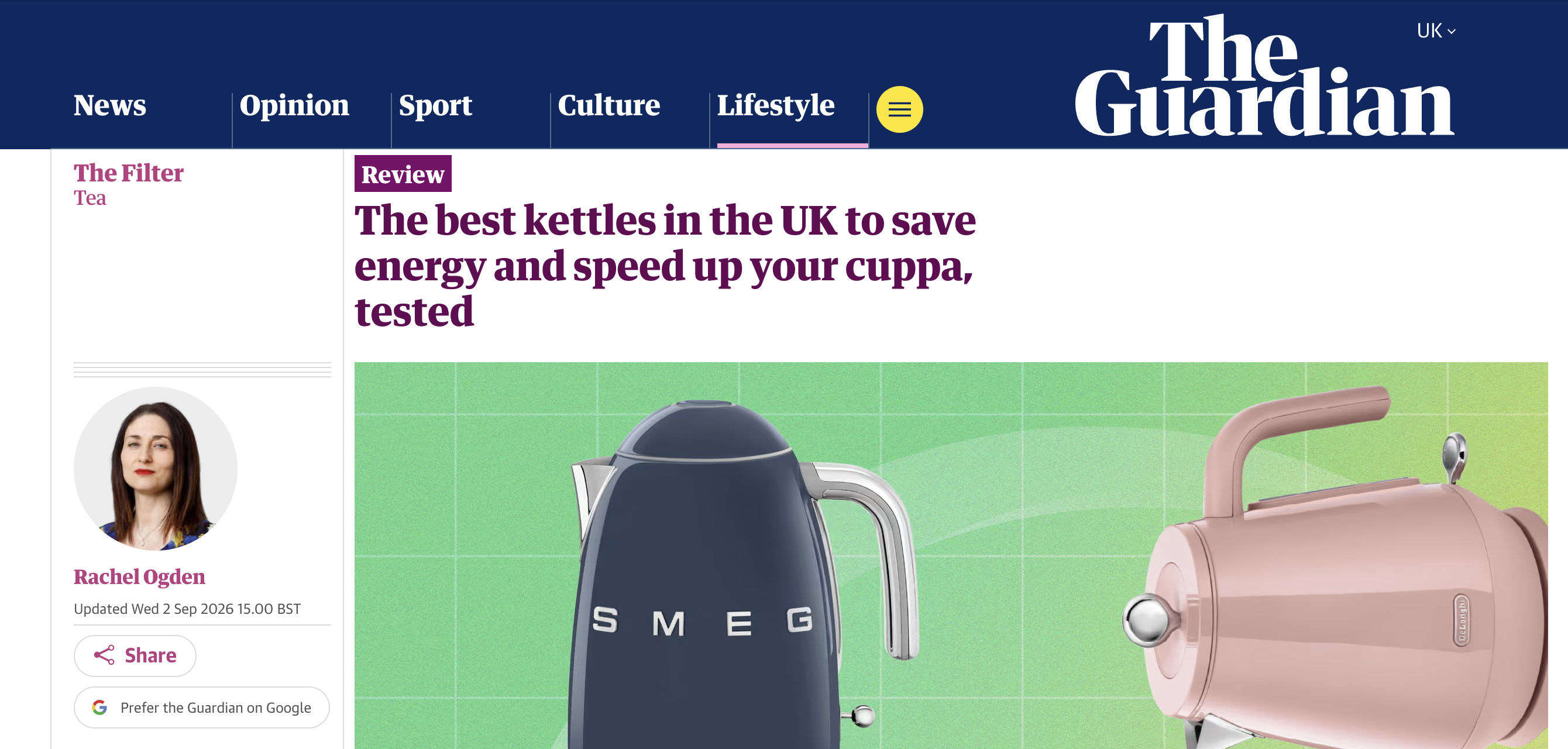
I'd invest in getting products discussed in relevant editorial content centred around consumer problems. This is in the form of listicles, product placements, and reviews
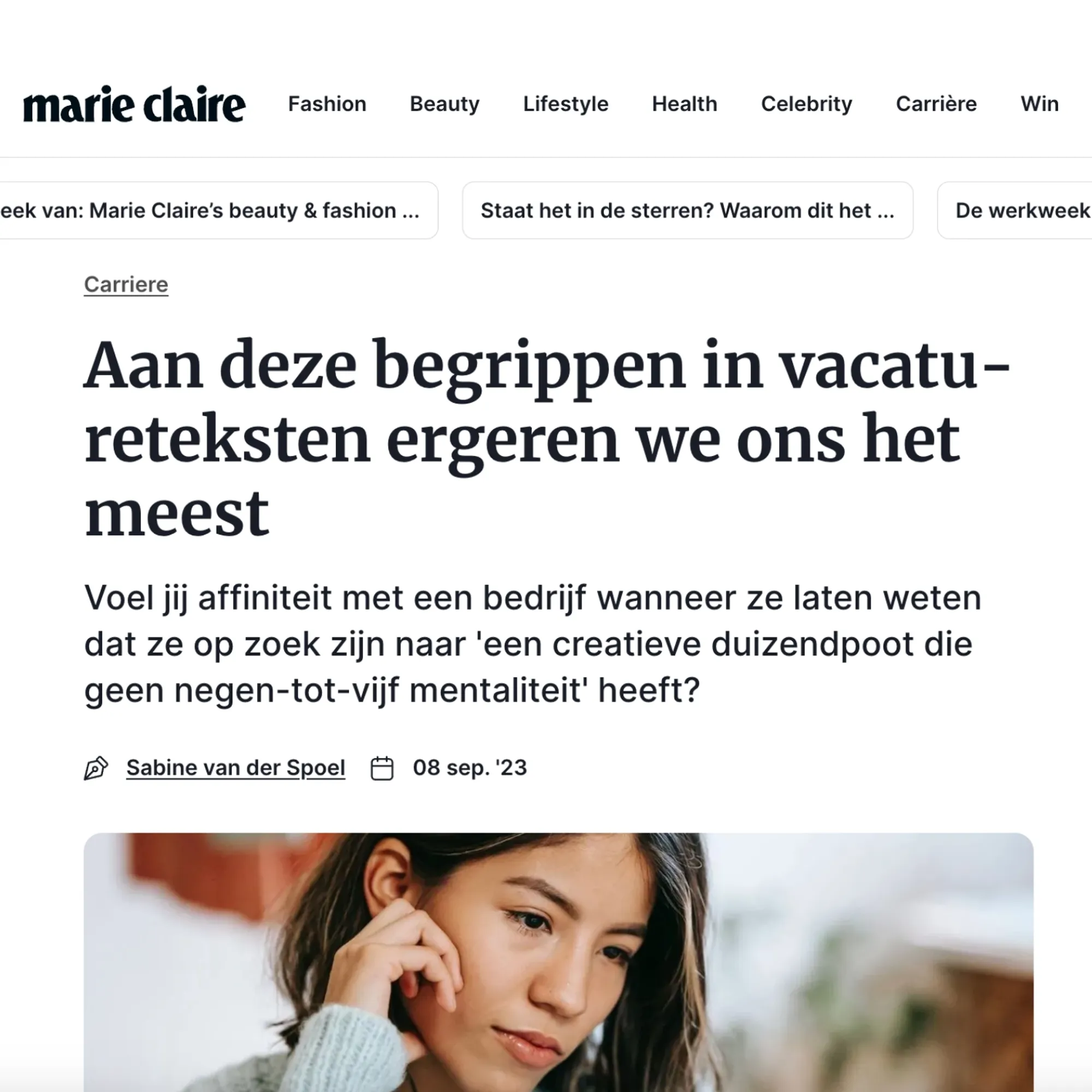
For example, best foundation for oily skin, best running trainers for wide feet or best family cars for long journeys (like the above article example we landed for our client Morphy Richards)
I'd focus on genuinely useful product information, expert testing and credible editorial opportunities rather than paying for meaningless mentions unrelated to what you do/sell.
2. Original data studies and expert commentary: £40K–£50K minimum
I'd invest in original research, data-led stories (using owned or third part data) and expert commentary that establish the brand as a credible source of information in its category.
A great example of this is Supersides data study analysing the use of emojis over the last decade - which emojis are dying out and which are on the rise. This is a data rich study pushing their design services
This case study earning over 122 backlinks on New York Post, Cult of Mac and more driving the brand to pos 1 on Google.
3. PR supporting targeted brand campaigns: approximately £20K minimum (not including the brand campaign itself)
I'd invest in PR campaigns designed to strengthen specific associations between the brand and commercially valuable consumer needs
I'll explain this more in the brand section below.
That brings us to approximately £90K–£120K annually, or 18–24% of a £500K PR budget as an example to go towards AI driven PR work.
For a large brand in a competitive category, I'd consider that a minimum starting investment, subject to what the research tells us.
And remember, I'd still protect the digital PR activity supporting traditional Google visibility, including relevant links to commercial categories.
Because GEO shouldn't come at the expense of the search performance that's already generating revenue.
Social search: There's an opportunity to get more visibility without paying for the biggest influencers.
This is where I think brands have a huge opportunity.
You don't necessarily need the biggest creators. You need creators whose content gets discovered when consumers search. The ones that rank/most visible and cited. And its not the Molly Maes of the world FYI.
According to The CMO Survey 2026, brands spend an average of 14.3% of their total marketing budget on social media, with that figure expected to increase to 17.1% over the next 12 months.
Say a brand has a £10M marketing budget.
At 14.3%, that would mean £1.43M invested in social.
I'd explore reallocating at least 20% of that social budget — £286K — towards AI discovery and social search initiatives, where the category opportunity justifies it.
I'd spend that money on nano and micro creators, search-led content briefs, identifying creators already ranking for relevant topics and creating genuinely useful content around consumer questions.
And I'd want to work with people who understand social search, not just influencer reach.
Our social search tool, SERPENT, shows why.
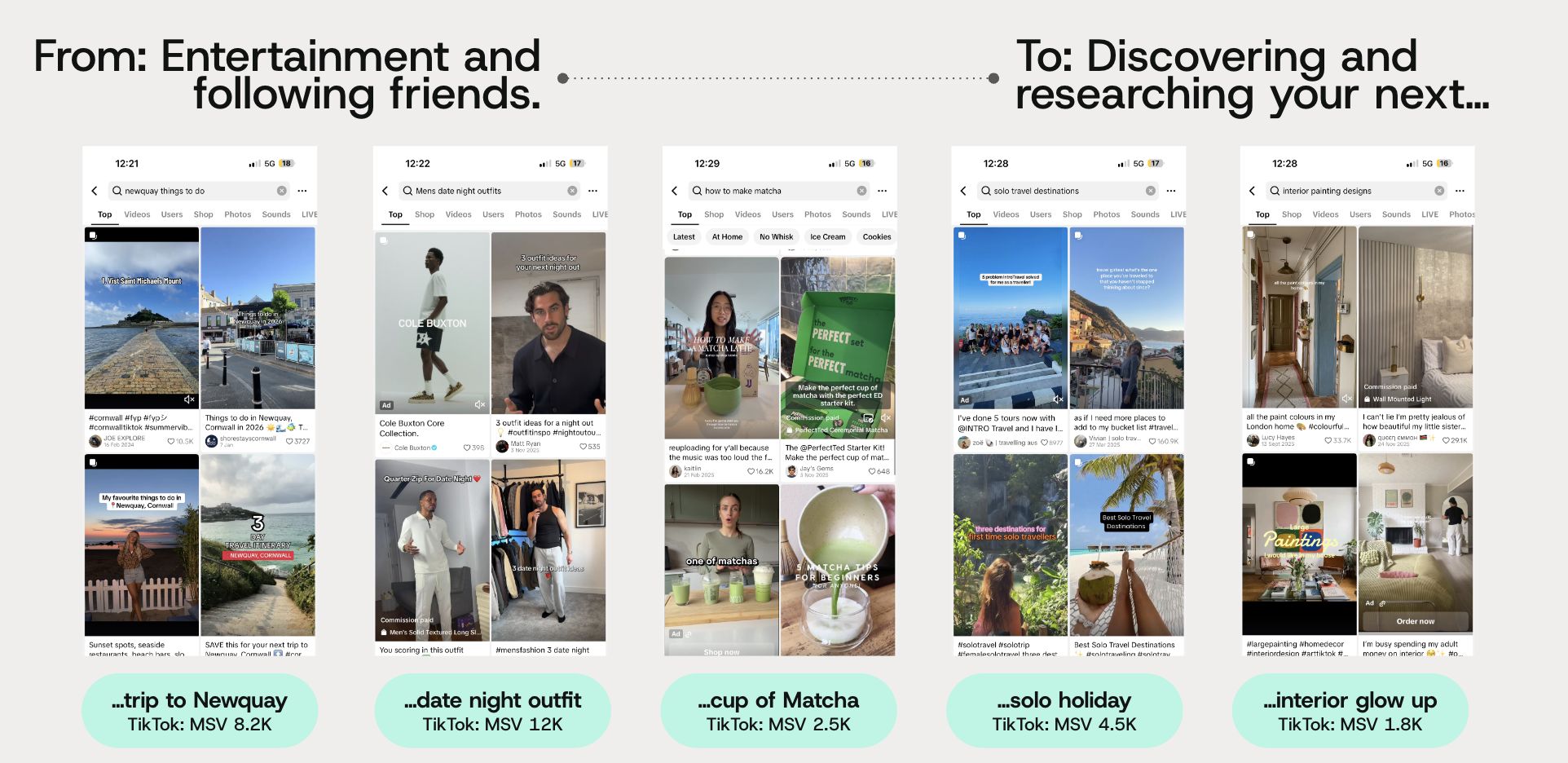
Across the TikTok keyword sets we've analysed:
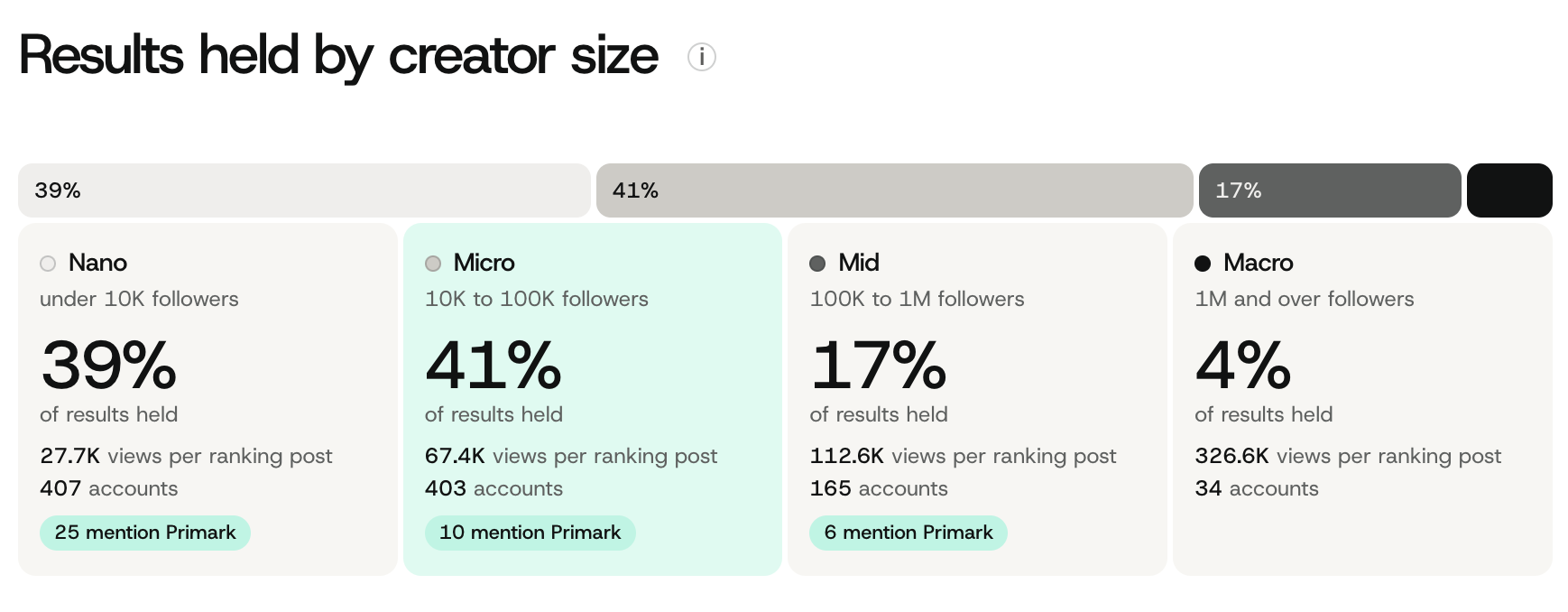
41% of ranking fashion content comes from micro creators with 10K–100K followers.
70% of ranking car rental content comes from nano creators with fewer than 10K followers.
Less than 2% of ranking content across our wider cross-industry dataset comes from creators with more than 1 million followers.
The Primark screenshot is one example from our fashion analysis. The under-2% figure comes from our wider cross-industry data, not that individual screenshot.
And that's an important distinction.
Social search isn't simply about follower count. It's about creating relevant content that people can discover when they're looking for answers.
I'd distribute that content across TikTok, YouTube and Instagram, prioritising the platforms and topics where our audience actually searches.
And I'd test Reddit too.
Reddit is an important source of consumer conversations, product experiences and recommendations.
If I was investing in Reddit for GEO, I'd explore defined test projects of around £50K focused on specific consumer pain points and questions.
But I'd focus on credible participation and useful contributions, not manufactured recommendations or fake conversations.
What about the future of social citations?
Profound's category research shows social and UGC currently represent a relatively small share of citations in many industries.
But I'm going to make a bold prediction.
I think social and UGC could eventually account for at least 25% of AI citations in some categories.
That's my prediction, not an established industry forecast.
Why?
Because as consumers become more sceptical of commercially driven product recommendations, I think authentic experiences, specialist creators and community discussions will become increasingly important sources of information.
And I wouldn't wait for that shift to happen before investing in social search.
Onsite SEO and technical SEO need GEO investment too. But I'd spend it differently.
I'd argue that in 2027, every part of your website needs to be built with AI agents and LLMs in mind. But primarily for humans.
For years, we've built websites for humans and search engines. Now there's a third audience: AI systems and agents that can research, compare, recommend and increasingly help consumers purchase products.
And for eCommerce brands, this changes how I'd invest in onsite SEO.
Here's where I'd focus the budget.
1. Technical SEO, structured data and AI accessibility.
I'd audit Product, Offer, Organization, Brand and applicable review structured data, ensuring products are clearly connected to their categories, attributes, pricing and availability.
I'd also review AI crawler accessibility, JavaScript rendering, internal linking and site architecture.
Can relevant AI search systems actually access and understand your most commercially valuable content?
Structured data isn't a guaranteed GEO ranking factor, but accurate, accessible and machine-readable information should be a technical priority.
2. Get your website ready for AI shopping and agents.
I'd invest in accurate product feeds, product identifiers, variants, stock availability, pricing, shipping information and supported shopping integrations.
If an AI agent is comparing running trainers for wide feet, can it identify the right product, understand its features, check availability and help the consumer purchase through supported experiences?
3. Product content built around consumer problems, not just keywords.
I'd rewrite product descriptions, category pages and buying guides around actual consumer pain points.
If someone asks ChatGPT for the best trainers for marathon training or additional cushioning, does your content explain why your product is relevant?
Not another 500 generic AI-written articles.
Better commercial content that actually answers consumer needs.
4. Freshness and accuracy.
I'd invest in keeping product information, comparisons, pricing, availability and buying guides up to date.
Not updating content for the sake of freshness, but ensuring AI platforms can retrieve accurate, relevant information.
I'd also make sure our onsite content supports the same product claims and brand associations we're building through PR, social and creators.
For a large eCommerce brand, I'd initially explore £50K–£100K annually towards AI-focused technical improvements, product content and commercial optimisation, assuming core SEO is already funded.
But this depends on the size of the website, existing technical foundations and commercial opportunity.
My argument? Don't create a separate GEO website strategy. Make AI discoverability and agent readiness part of how your entire website operates.
Because your next customer might not be browsing your website themselves.
They might be asking an AI agent to find the best product for them.
Brand: This could be the most important investment of them all.
I've talked about PR, social and SEO.
But there's one discipline that ties everything together.
Brand.
Because you can spend millions on marketing, but if AI doesn't associate your brand with the right products, audiences and consumer problems, are you really building visibility where it matters?
Here's where I'd invest.
1. Understand consumer pain points before they even need your product.
I'd start with consumer research.
Not just demographics or personas, but the actual problems people experience before they start looking for a product.
For running trainers, that could be wide feet, shin splints or wanting to improve performance.
I'd analyse Google searches, TikTok comments, Reddit conversations and YouTube to understand these triggers.
At Rise at Seven, we offer an initial consumer pain-point research project for £5K.
For me, that's one of the first investments I'd make before spending hundreds of thousands on campaigns.
2. Audit what AI actually associates your brand with.
What does ChatGPT associate your brand with?
What products, problems and audiences does it recommend you for?
And more importantly, is that what you WANT to be known for?
I'd compare those associations against competitors and identify the biggest gaps between our desired brand positioning and how AI currently represents us.
I'd use consistent, commercially relevant prompts across multiple AI platforms rather than relying on a handful of individual answers.
3. Invest in campaigns that close those gaps.
Imagine Nike was underrepresented in AI recommendations around running innovation and performance technology.
I'd build an integrated campaign around that opportunity.
Product PR, expert commentary, creators demonstrating the technology and onsite content explaining the benefits.
Or imagine Red Bull wasn't strongly associated with gaming and late-night gaming occasions.
I'd invest in gaming publishers, creators, communities and content to build that relevance.
These are hypothetical examples, but the strategy is the same.
So how much would I invest?
I wouldn't automatically allocate 10% of the brand budget to new campaigns.
I'd start with consumer research and an AI brand association audit, identify the most commercially valuable gaps, then direct existing brand campaign investment towards closing them.
And I'd measure whether those associations and recommendations actually improve.
Because SEO makes you discoverable. PR makes you credible. Social makes you relevant.
But brand defines what you want to be famous for.
And in an AI-first world, it's not just about whether consumers know who you are.
It's whether AI understands who you are, what you sell and why you deserve to be recommended.
Who owns the GEO budget and the ROI?
This is the part I think CMOs need to get right. Ultimately everyone is responsible. However accountability should sit with the one reporting and directing - the seo team.
The SEO team will report on it and act as both the search first insight and the reporting function for all teams and prove ROI of investment. You can actually test the impact of individual marketing channels on AI visibility.
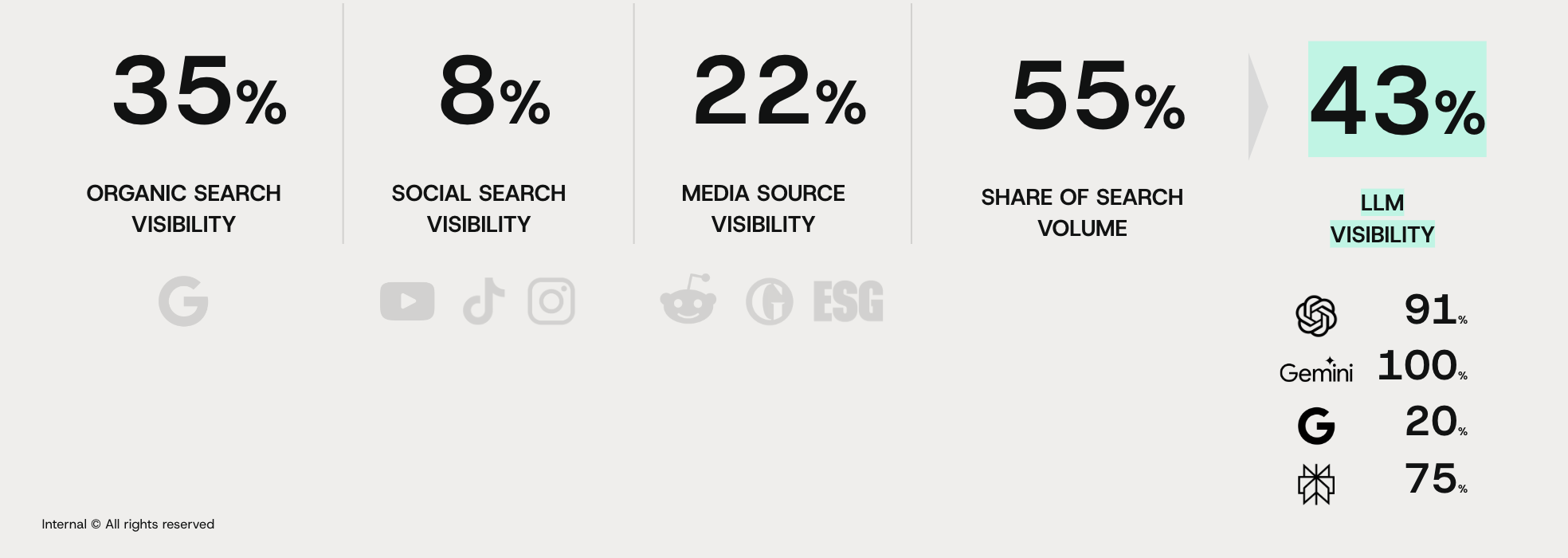
Take social search (in the below screenshot example where a client has 8% visibility currently). Identify a set of commercially important keywords, measure your current visibility (8%), then invest in improving your rankings across TikTok, YouTube and Instagram.
Say it goes up to 20%, track whether that increased visibility is followed by an improvement in LLM recommendations (the last metric of 43% going up) for the same topics.
You can run similar tests across digital PR and onsite SEO, isolating activity where possible to understand which investments are moving the needle.
Because the question isn't just whether your social search visibility is increasing. It's whether that investment is helping your brand become more visible and more frequently recommended by AI.
Someone taught me once, if everyone is accountable no one is so it's important to be clear who owns the outcome. And for me that is a strong strategic team/person.
I'd have one person/team accountable for AI search performance, but every channel responsible for contributing to it.
I don't want five departments reporting five different GEO metrics. I want one view of whether our marketing investment is making the brand more likely to be recommended and chosen.
My final advice to CMOs planning their 2027 budgets
Stop asking how much more money your SEO team needs for AI search. Start asking how your entire marketing budget needs to change to reflect the way consumers now discover and choose brands.
If you are a CMO, and you want some advice on this - feel free to DM me on LinkedIn
Questions you're likely thinking?
Should my GEO budget cover global markets or vary per country? Absolutely- LLM/GEO strategy should vary by country. Do not expect one GEO budget to cover global visibility
What ROI should I expect from GEO budget? You should expect to get back at least 3X what you spend, BUT the important question you actually should be asking is how do I track it? You are going to need an attribution project to set this up because ultimately being the most visibility brand in GEO will drive both direct, brand and non-brand revenue/traffic. The user is LIKELY going to go direct to your website OR to Google and search for the brand. This isn't a non-brand-only exercise.
Should I reduce my Google SEO budget to fund AI search? I wouldn't be reducing your SEO budget, but reallocating some of it. But I wouldn't do that to the SEO budget alone. I would do the same with Social, Brand and PR.
Where should I invest my GEO budget first? Personally, I'd start with the website. Controversial, I know. Why? Because it's the first place agents go (to crawl who you are, what you do and what you sell) and the last place people go (to buy). Despite your website playing a small role in the user journey now, it still is core to what agents know about you and id start building the foundations for product, ecommerce and onsite guides. I'd prioritise schema, product benefits, FAQs, How tos, reviews and case studies.
Written By
Carrie Rose
Founder
Tue 03 Nov
AEO Search
CEO & Founder of Rise at Seven, and my job is to be out in the market and see which way the wind is blowing in the next 1, 2, 5 or 10 years time and bring that home to my team and clients. I lead the vision of the agency across the UK & US.