The World Cup Isn't Just On the Pitch, It's in Your Wardrobe
Share
The biggest sporting event on the planet just became fashion's biggest moment, too. Here's why every brand with a pulse is dropping a World Cup collection right now, and what it means for how brands use events to sell.
The World Cup kicks off on the 11th of June. But the real competition, the one brands actually care about, started months ago, and it's being played out in limited-edition drops, celebrity collabs and sold-out capsule collections.
This isn't a coincidence. It's a strategy. And it's working.
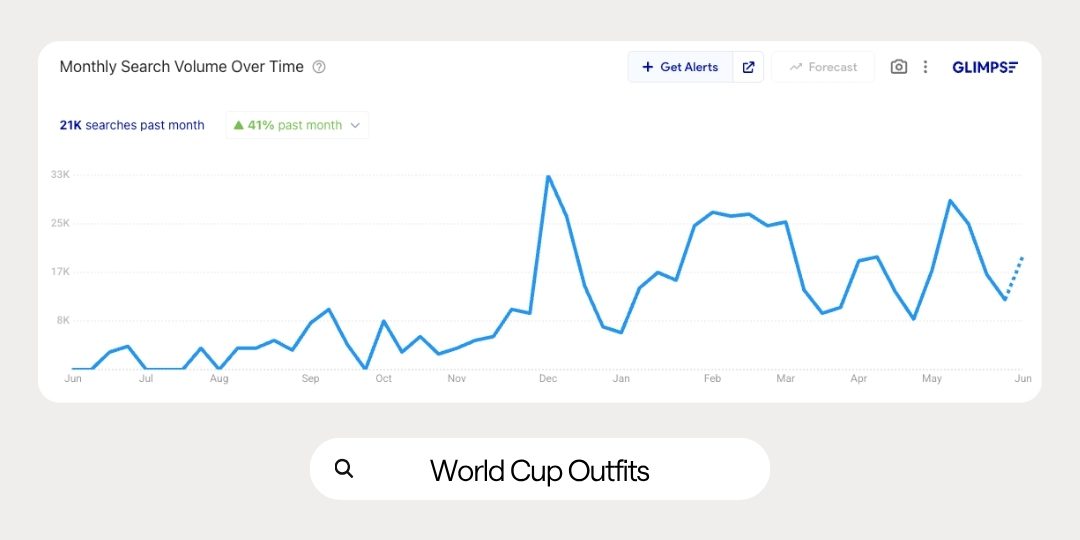
Search data shows this is not just a brand-led trend. It is a behaviour shift already happening in real time. Using Google Trends and Glimpse, we can see people are already searching around the tournament through a fashion lens. “World Cup outfits” is sitting at 21K searches in the past month and is up 37% month on month. That means people are not only thinking about who is playing. They are already planning what to wear around the moment.
Google it.
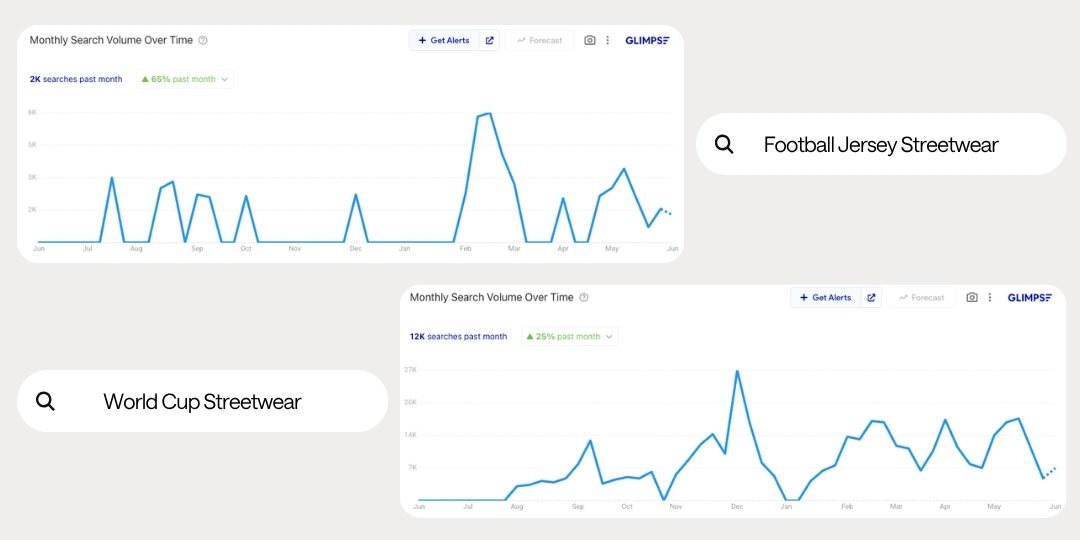
The same pattern appears when you move from general outfits into streetwear. “Football jersey streetwear” is smaller but sharper, with 2K searches in the past month and +101% month on month. “World Cup streetwear” is larger, with 12K searches in the past month. Together, these terms show the category stretching beyond traditional fanwear and into styling, subculture and product discovery.
So when we see Nike, Adidas, Represent, Palace, Kith and others building World Cup collections, this is not random timing. It is brands moving into a category that search behaviour is already validating: football as a fashion moment. Here's what's happening, why it matters, and what every brand marketer should be taking notes on.
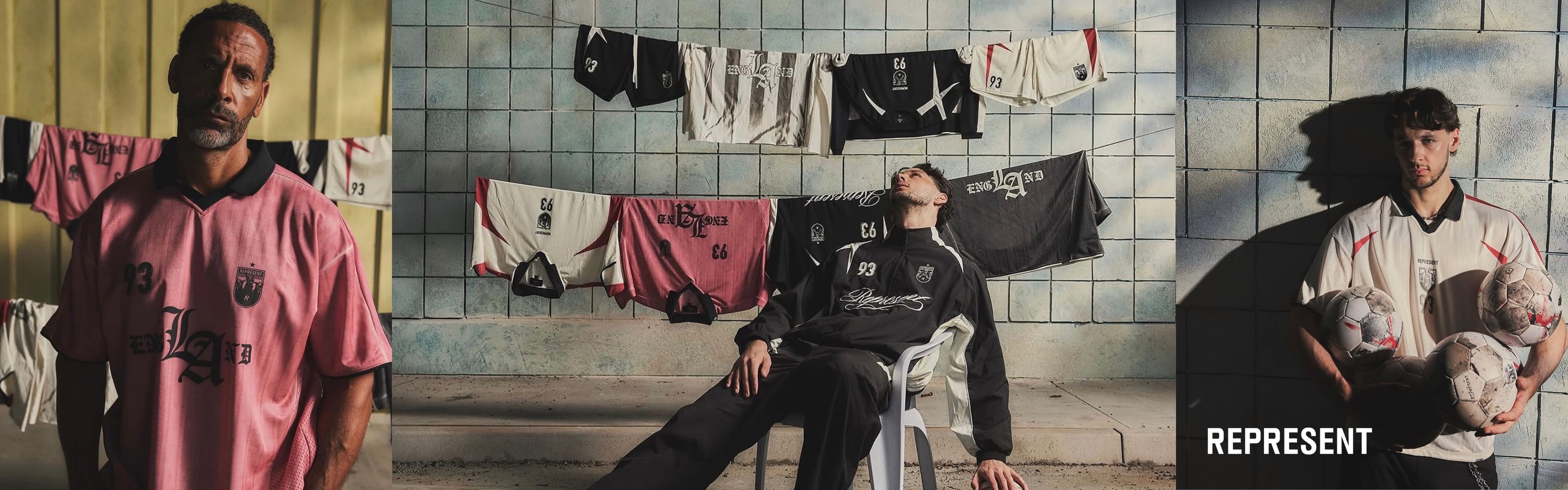
The Represent x Rio Ferdinand Play: Celebrity, Timing, Urgency
Right at the sharp end of the tournament build-up, Represent, the Greater Manchester brand founded by George and Michael Heaton, dropped an England-inspired range in collaboration with Rio Ferdinand & James Trafford. It's a textbook PR move: take a credible brand with serious streetwear credentials, pair it with a football legend who still commands enormous cultural authority, and drop it right as national excitement hits peak fever.
The genius here isn't just the product. It's the timing. A limited-edition drop the night before tournament fever fully kicks in creates urgency, social chatter, and press coverage all in one shot. Rio doesn't just add a name to a label; he brings an audience, a story, and cultural legitimacy that money can't simply buy through traditional advertising.
This is exactly how brands should be thinking about event-led PR. It's not about slapping a St George's Cross on a hoodie. It's about building a narrative that earns attention.
Nike's Cryo Shot Programme: Seven Collaborations, One Masterstroke
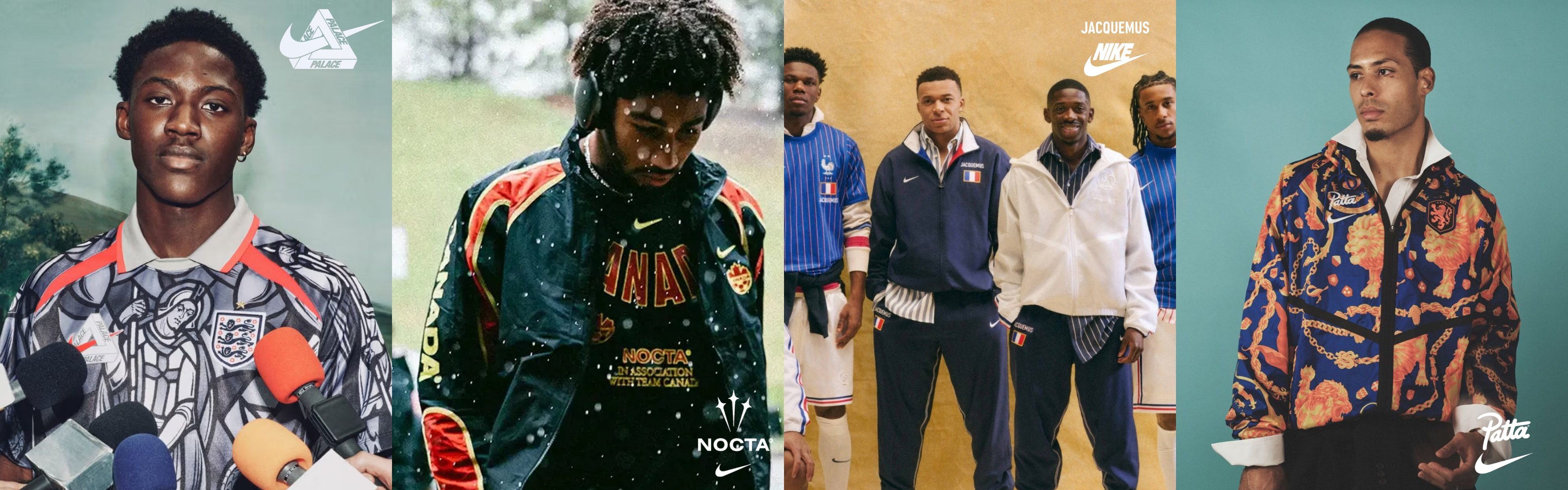
Nike didn't do one World Cup collaboration. They did Seven.
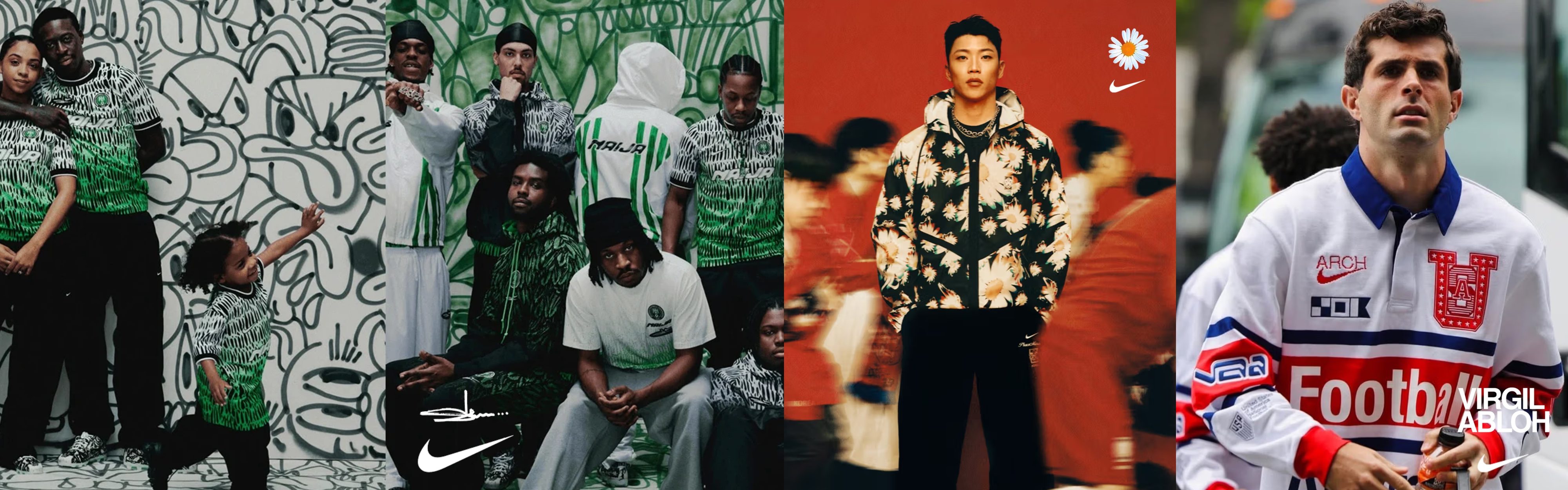
Under what's been dubbed the Cryo Shot programme, Nike brought in NOCTA, Jacquemus, Patta, Palace, Slawn, PEACEMINUSONE and V.A.A., seven distinct creative voices from seven distinct cultural worlds, to produce a series of World Cup capsule collections celebrating football through the lens of local culture.
This is a sophisticated piece of brand strategy. Nike isn't just selling shirts. It's positioning itself as a global cultural institution that speaks fluently across subcultures, skate, grime, K-pop aesthetics, French minimalism, UK terrace culture. Each collaboration reaches a different audience and generates its own wave of earned media.
The Palace x Nike England drop is a case in point. The collection, headlined by a stunning stained-glass pre-match jersey, was fronted by a cinematic campaign film featuring Wayne Rooney and Jill Scott. It's not a kit. It's a cultural statement. And that distinction is everything.
Meanwhile, the Jacquemus x Nike partnership brought French football culture to the fashion pages, with members of the French national team wearing pieces from the joint collection. When football players become the models, and the campaign runs across fashion press as naturally as it runs in sports media, you've achieved something most brands can only dream of: genuine crossover.
Adidas: Playing the Long Game (and Winning)
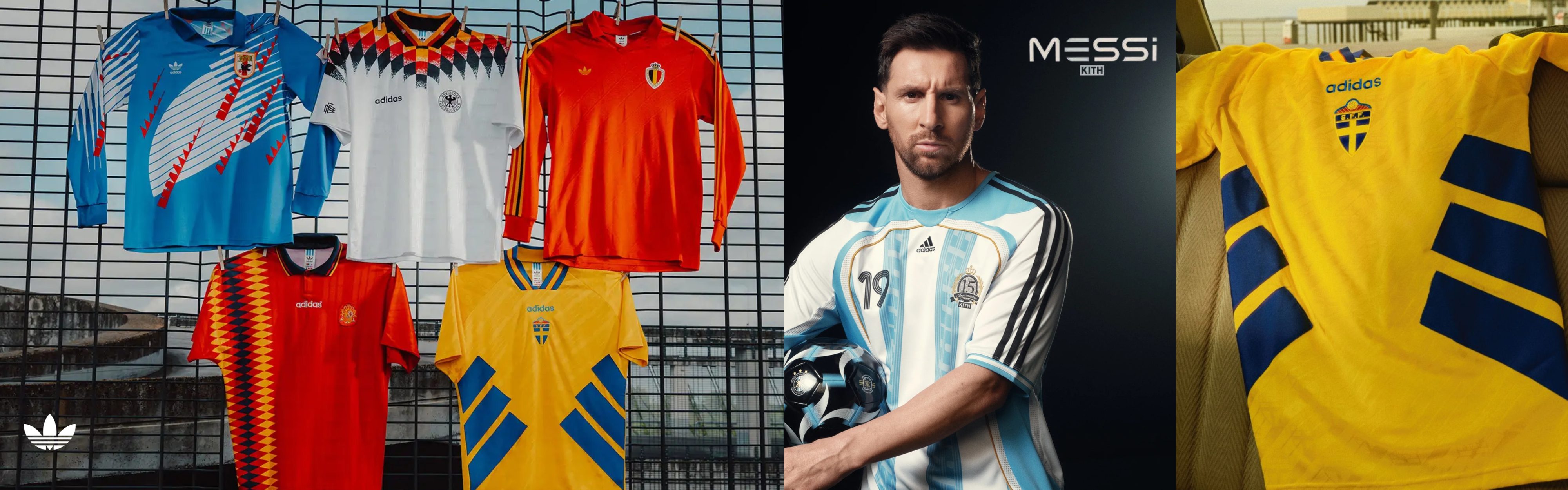
Adidas came in with a different kind of power move: nostalgia, volume, and the world's most iconic footballer.
The Bringback collection is exactly what it sounds like: throwback shirts pulling from iconic World Cup eras, reimagined for 2026. Bold geometric patterns, tonal striping, chest graphics from the archives. It speaks directly to the terrace-core trend that's dominated menswear for the past few years, and it does so with the authenticity that only a brand with 50+ years of World Cup history can bring.
But the headline act is the three-way collaboration between Adidas, Kith and Lionel Messi, and it's enormous in scope. Designed collaboratively over a year between Ronnie Fieg and Messi himself, the collection spans performance jerseys revisiting key moments from Messi's 20-year career (including his 2006 World Cup debut), six footwear styles, wool tracksuits, washed denim, a double-breasted suit and a leather duffel bag. It's football-meets-luxury-menswear, and it sold 721,712 Instagram likes before a single item shipped.
The limited-edition trading card mechanic, with fewer than 100 PSA-graded, Messi-signed cards randomly inserted into orders, transforms a clothing purchase into a collectable moment. Adidas is on record projecting around €250 million in World Cup product revenue from this tournament cycle. Based on what they've built, that looks conservative.
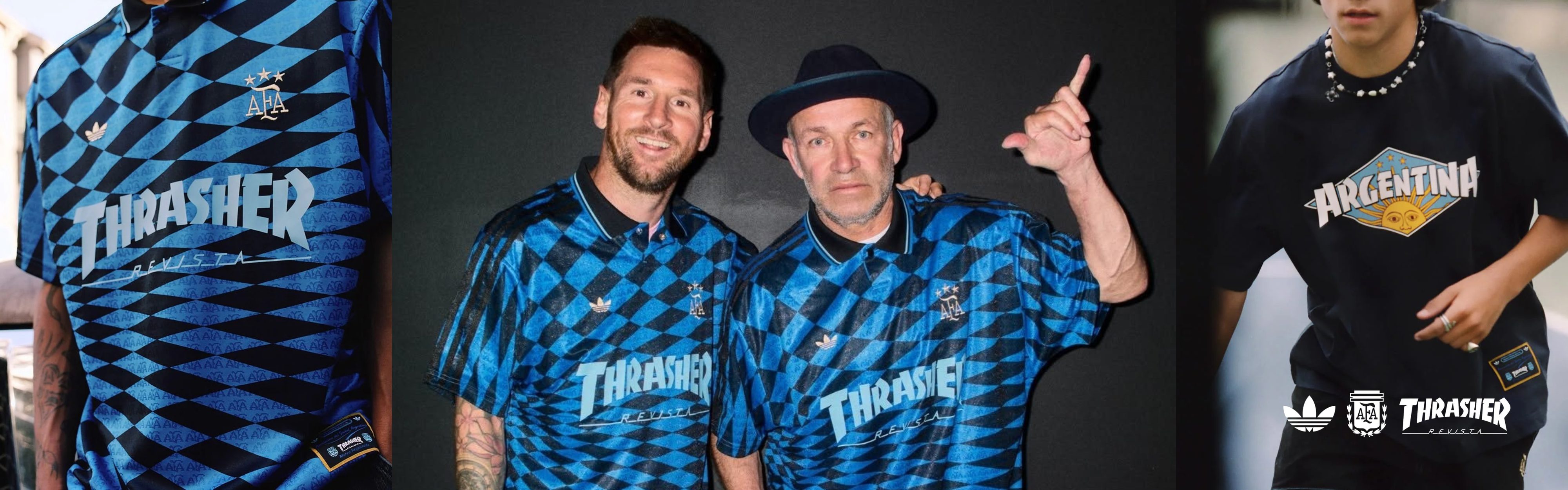
They didn't stop there. The Thrasher x AFA x Adidas Originalstriple collaboration dropped on 1 June, blending skate culture with Argentine football heritage, featuring the new Glenburn sneaker and diamond-check jerseys in sky blue and white. It's the brand speaking to multiple audiences simultaneously without breaking a sweat.
Umbro Nations 2026
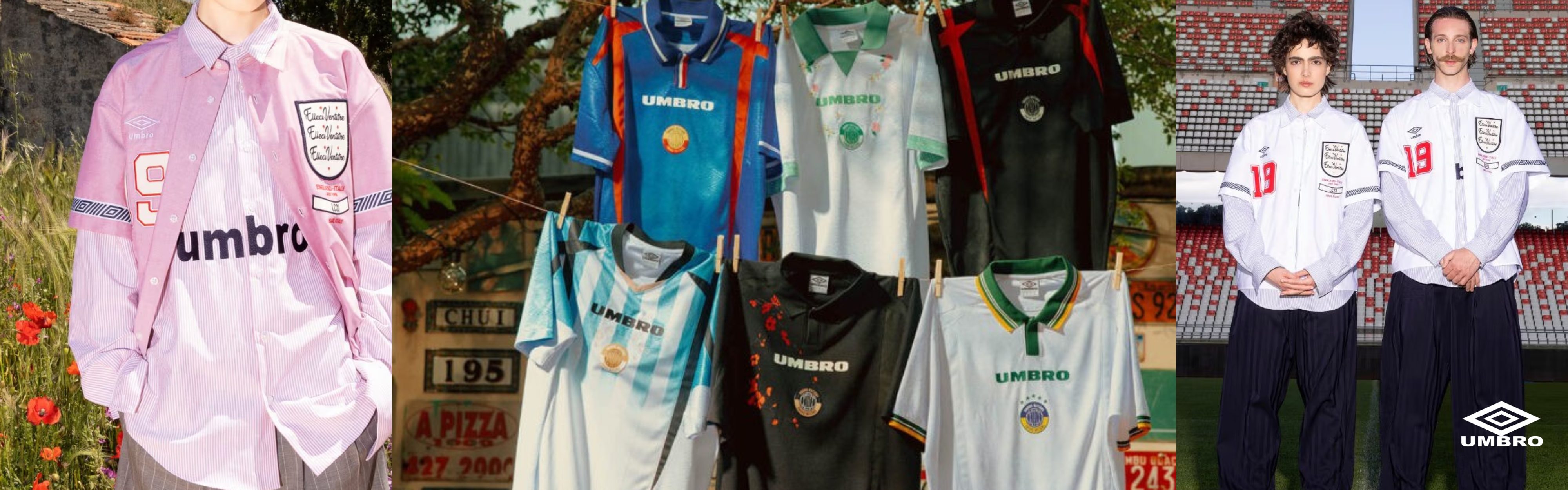
Umbro played it smart with two distinct moves: a Nations 2026 collection reimagining six international kits, England, Brazil, Argentina, France, Japan and Morocco, for daily wear, and a collaboration with Italian label LC23 titled #19, which reworks England's iconic Italia 90 shirts into tailored pieces that blur the line between match shirt and dress shirt. Heritage, done properly.
Adidas x BAPE
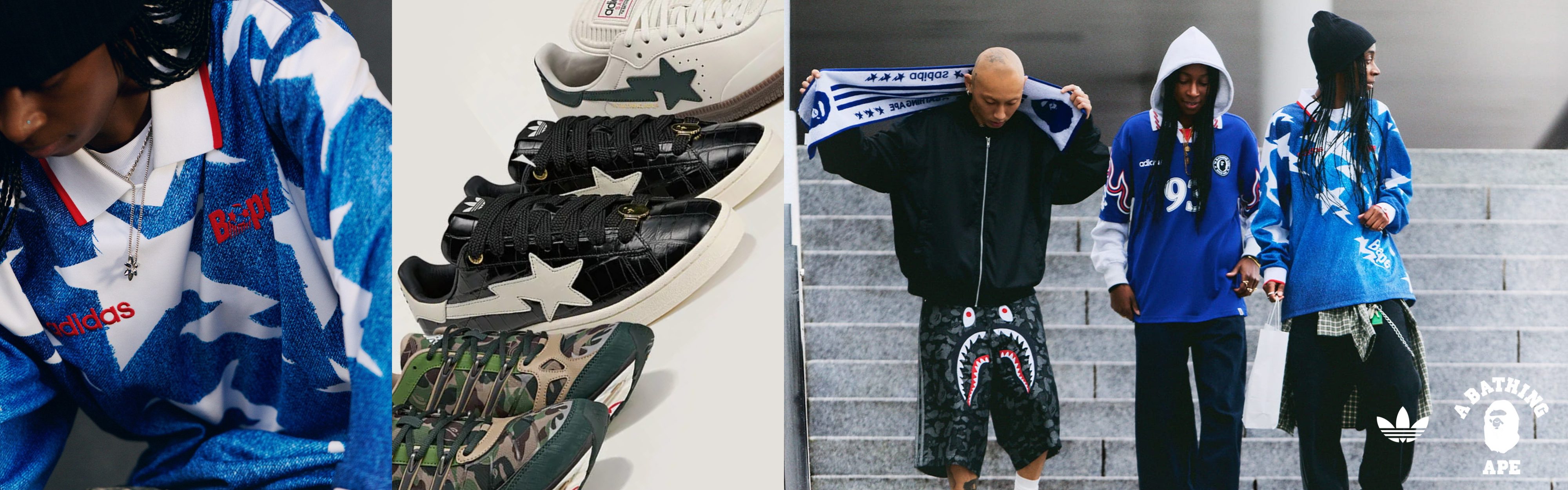
The second Football Collective chapter features two fan jerseys, including a reimagined Japanese national team shirt from the '90s with BAPE flame graphics, alongside three footwear silhouettes, the Samba, Campus 00s and Adistar HRMY, all rendered in BAPE's signature camo codes and framed as the unexpected collab that absolutely earns its place in the article.
Travis Scott x Nike
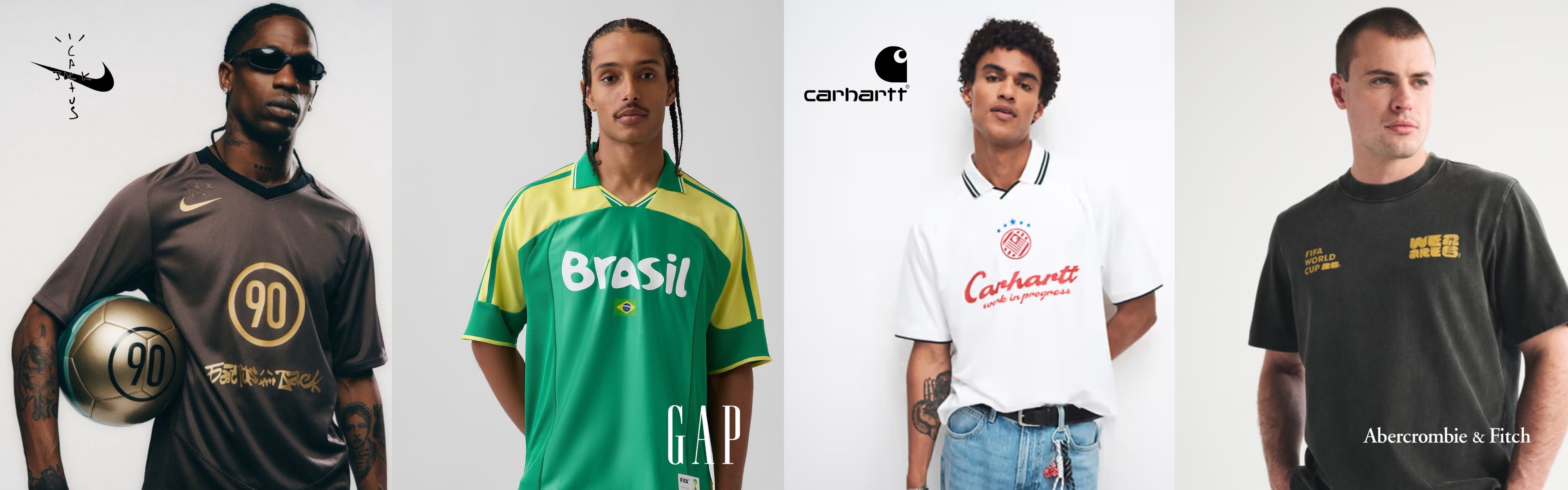
The Cactus Jack x Nike T90 shirt reworks Nike's iconic Total 90 archive into a gritty, streetwear-driven capsule, alongside the Phantom 6 Low Elite boots, marking Scott's first performance-focused football footwear project. He's also part of Nike's wider World Cup global cast, appearing alongside Ronaldo, Haaland, Kim Kardashian and K-pop star Lisa.
Carhartt WIP
Their first collaboration with Tokyo-based label F.C.Real Bristol spans sportswear-inspired apparel, accessories and football memorabilia, marked by a series of public table football tournaments across ten global cities.
Gap
The OuiGap collection was designed by Ouigi Theodore, founder of The Brooklyn Circus, paying homage to Haiti's 1974 football team with a "74" motif across jerseys, jackets, knits and coordinated separates.
Abercrombie & Hollister
Abercrombie dropped a FIFA-licensed graphic range, while Hollister put together a 22-piece capsule with Kappa, blending the Italian sportswear brand's football heritage with Hollister's youth-driven aesthetic.
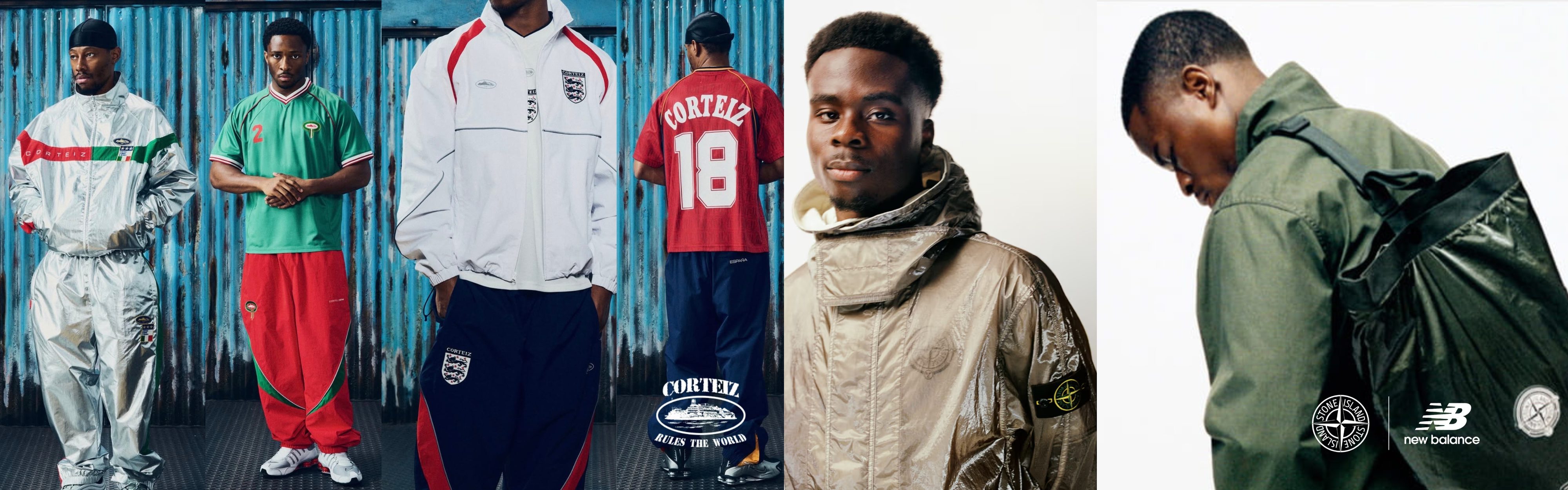
Corteiz
RULESTHEWORLDCUP Tour concept is genuinely the most interesting activation in the whole piece. 11 cities, 11 nations, six weeks of drops timed to the tournament schedule is a masterstroke that deserves more than a line, really.
New Balance X Stone Island
The anchor piece is the New Balance ABZORB 1890 sneaker dropping on the 4th June, with the full capsule including a reversible resin-coated ripstop tracksuit, matching jacquard football shirts and shorts, and a Nylon Prismatico-TC hooded jacket, all fronted by Bukayo Saka and Endrick, two players who represent the new generation of football talent shaping both sport and style.
The search opportunity hiding in plain sight
Our Global Head of Marketing Ray Saddiq says ''The brands dropping World Cup collections aren't just generating hype; they're moving into a space where search demand is already building and the door is still open''
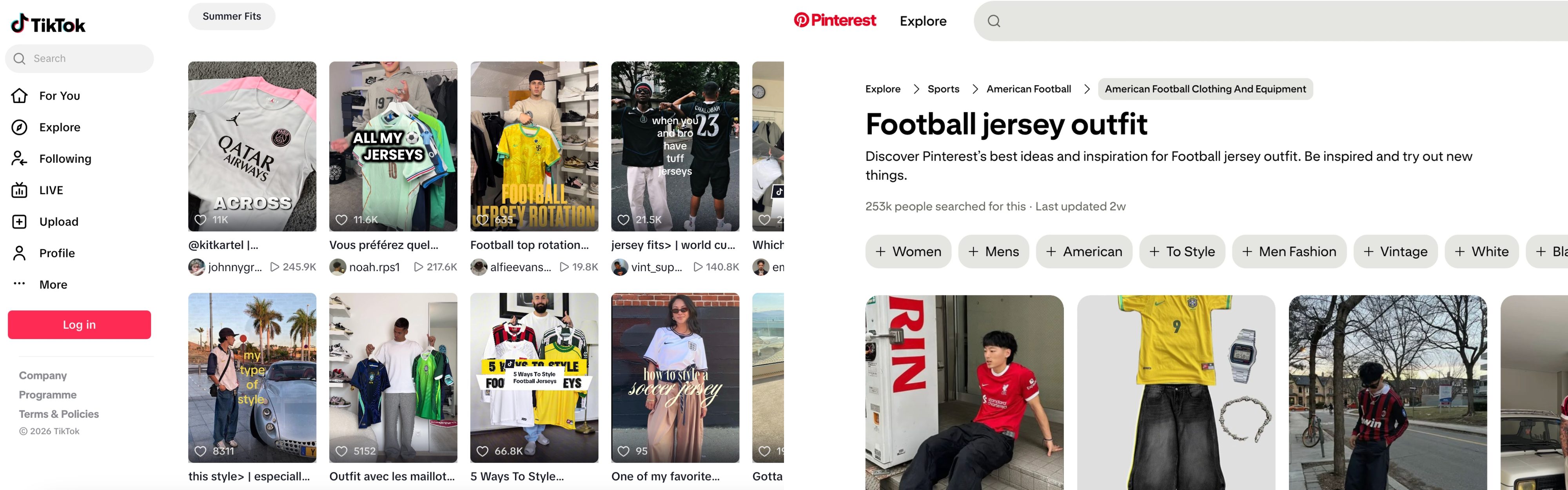
"Football kit outfits" has 2.96M search popularity on TikTok, up 68.1%, with styling videos already forming around the query. Pinterest boards around football jersey and football shirt outfit inspiration are filling up, meaning this demand isn't just transactional, it's visual, planned and style-led. The audience skews male but with enough female interest to justify both angles.
Nike and Adidas are already fighting over official World Cup collection demand, which is visible in trend data, with both terms rising sharply as the tournament approaches. But that's not the space most brands should be chasing. The smarter opportunity is the one sitting between football, streetwear and style. Building dedicated football streetwear categories on-site, supported by styling content, "how to style a football shirt", "football kit outfit ideas", "World Cup outfits", and feeding Pinterest boards and TikTok from the same creative. Don't just sell the shirt. Own the outfit. Own the search journey before the tournament turns rising interest into mass demand".
“Represent does not need to outspend Nike or Adidas. It can own the category between football, streetwear and style”
Ray Saddiq
Global Head of Marketing
If I were Represent, I would not treat the Rio Ferdinand collaboration as a one-off World Cup drop. I would use it as the start of a category play''
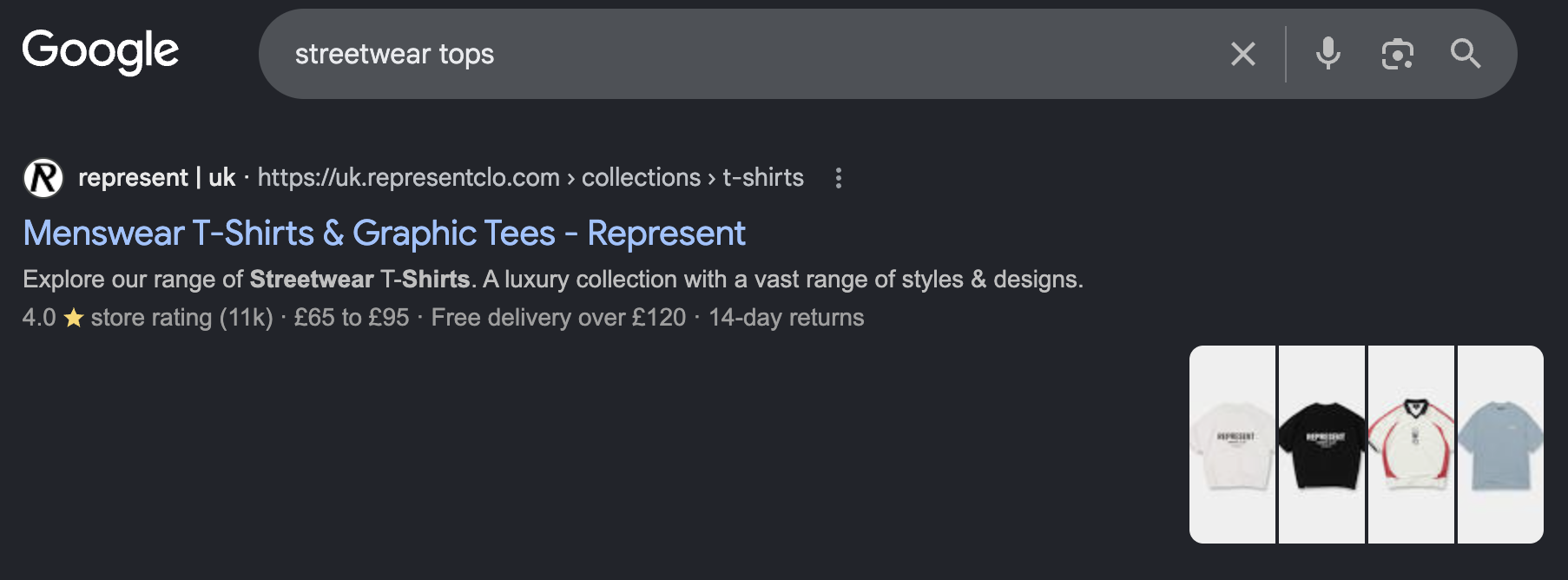
Represent already has authority in the streetwear tops category. It also has search visibility to build from, ranking in position one for “streetwear tops”.
That gives the brand a foundation most World Cup fashion plays will not have: it is already visible
For the core commercial language around streetwear. Build a football streetwear category on-site. Support it with styling guides, "how to style a football shirt", "World Cup outfit ideas", "football kit looks for men and women". Link it back to your existing product pages.
Feed Pinterest with outfit boards.
Turn all of it into TikTok content by partnering with creators and providing them search-optimised social briefs, while the demand curve is still climbing.
The opportunity is simple: Don't just sell the shirt. Own the category via the outfit, the styling, and the search journey.
What This Means for Brand Strategy
The World Cup playbook being written right now is one that any brand marketing team should study, whether you're in fashion, consumer goods, or anything else.
Events create permission - A collaboration or campaign that might feel forced in any other context feels entirely natural when anchored to a global moment. The World Cup gives brands a reason to do something bold, and consumers a reason to pay attention.
Scarcity is the mechanic - Limited drops, exclusive colourways, randomly inserted trading cards, the best World Cup collections aren't just products, they're events in themselves. The drop is as important as the item.
Credibility comes from casting - Rio Ferdinand. Wayne Rooney. Lionel Messi. Jill Scott. These aren't just famous faces; they're culturally trusted figures in specific communities. The collaboration only works if the talent genuinely belongs in that world.
Cross-cultural reach multiplies value - Nike's seven-collaboration strategy ensures that each drop reaches a different audience without the brand itself feeling stretched or incoherent. One event, seven audiences, seven waves of earned coverage.
America is the unlock - For UK brands with US ambitions, and Represent is very much in that category, having opened its West Hollywood store in 2024, the World Cup landing in LA and New York is a rare open door. The question is who's bold enough to walk through it.
The final whistle on this tournament isn't until 19 July. But for brands paying attention, the most important moments have already happened, in the drops, the campaigns, the celebrity partnerships and the cultural conversations that started months before a ball was kicked.
The World Cup isn't just football's biggest stage. In 2026, it's fashion too.