Social SEO UPDATE: Google Just Made Social Search More Measurable
Share
HUGE SEO and social update!
Google Just Made Social Search Measurable: Inside Search Console's New Platform Properties
Google has launched platform properties in Search Console, letting brands track how their Instagram, TikTok, X and YouTube content performs in Google Search. Here's what it means and what to do about it.
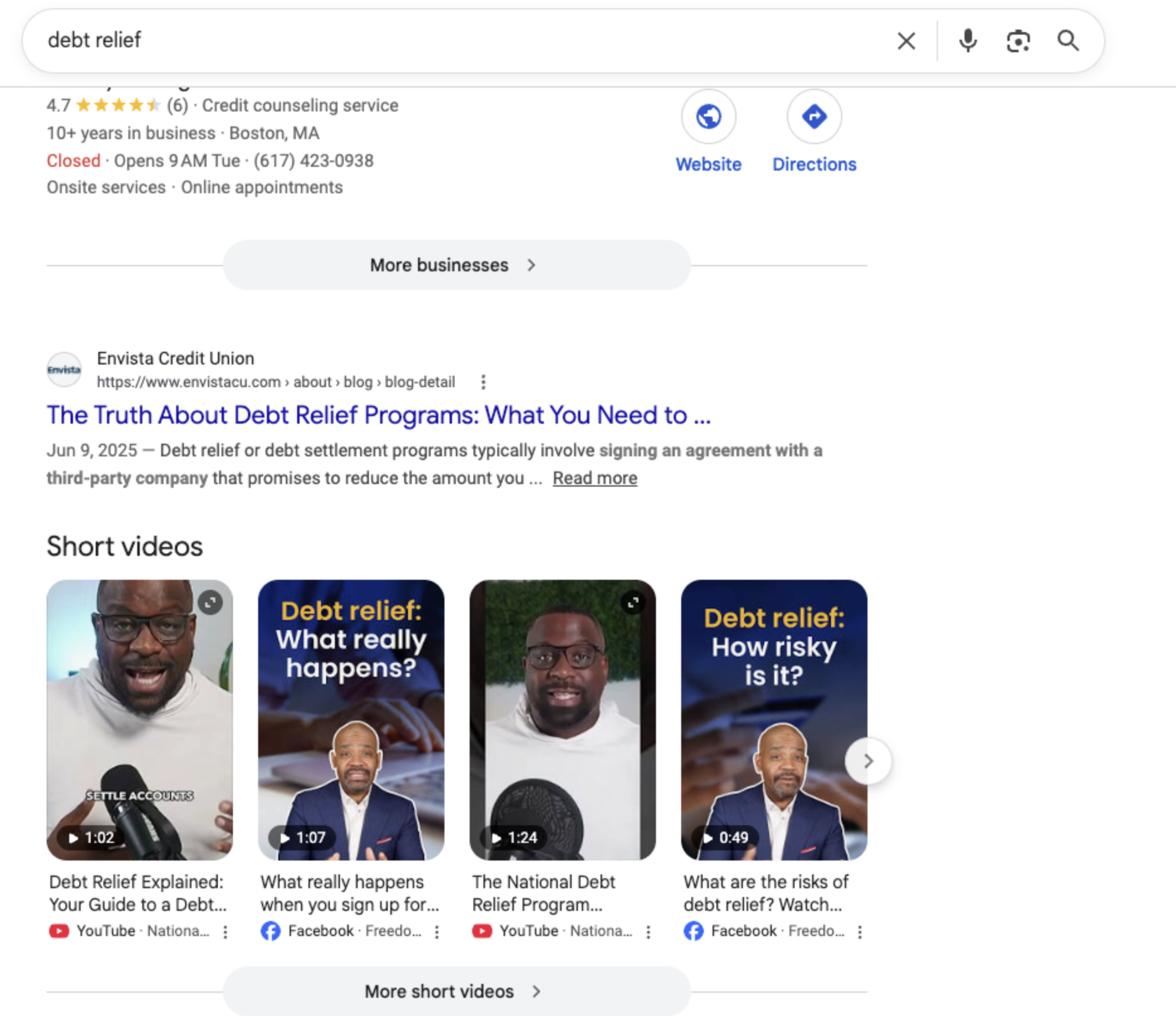
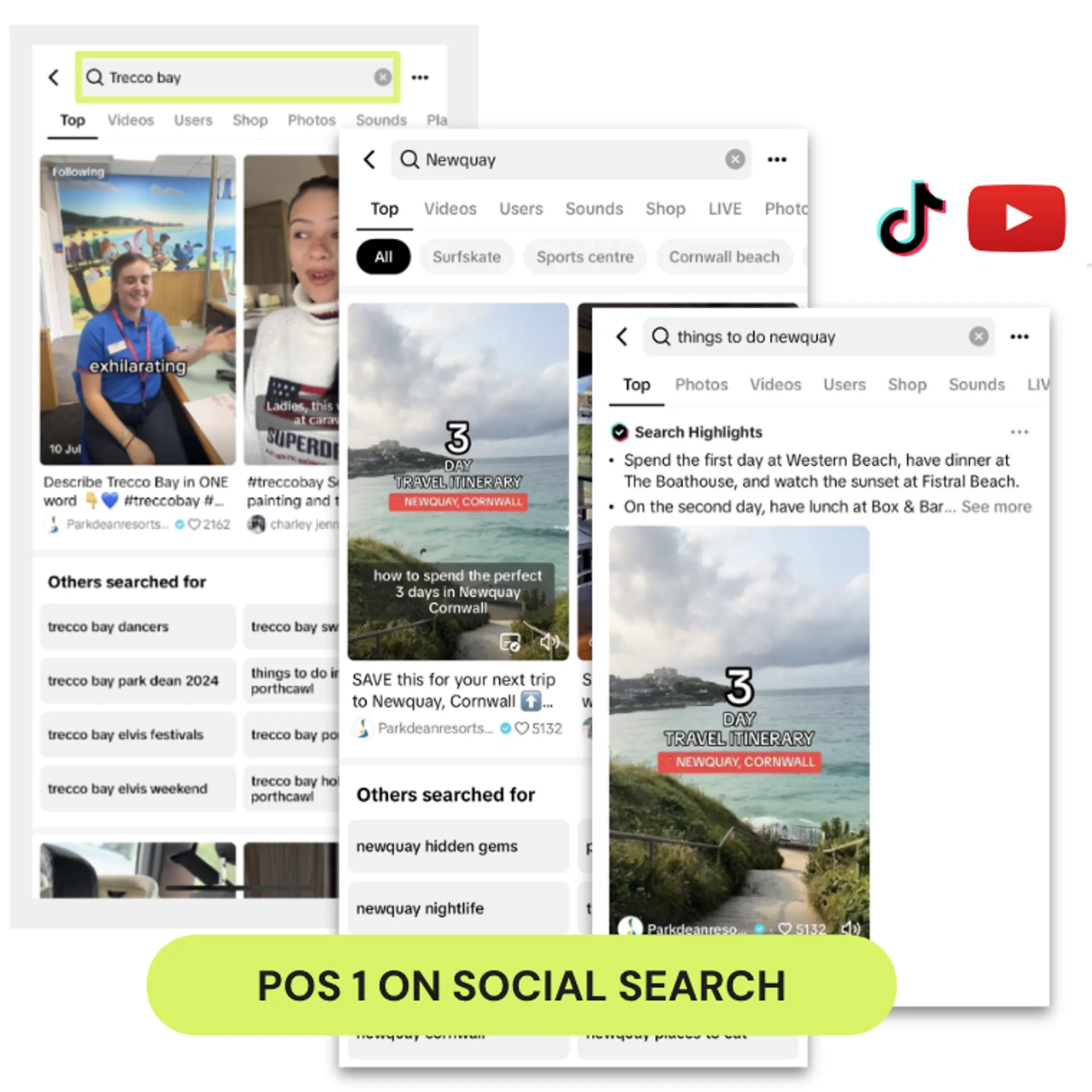
For years, we at Rise at Seven have been telling brands that social content is search content. That your TikToks rank. That your Instagram Reels show up when someone Googles your category.
PROOF:
And for years, the biggest pushback we heard was the same: "Fine, but how do we measure it?"
As of this week, Google has answered that question. queue the confetti
What's actually been announced
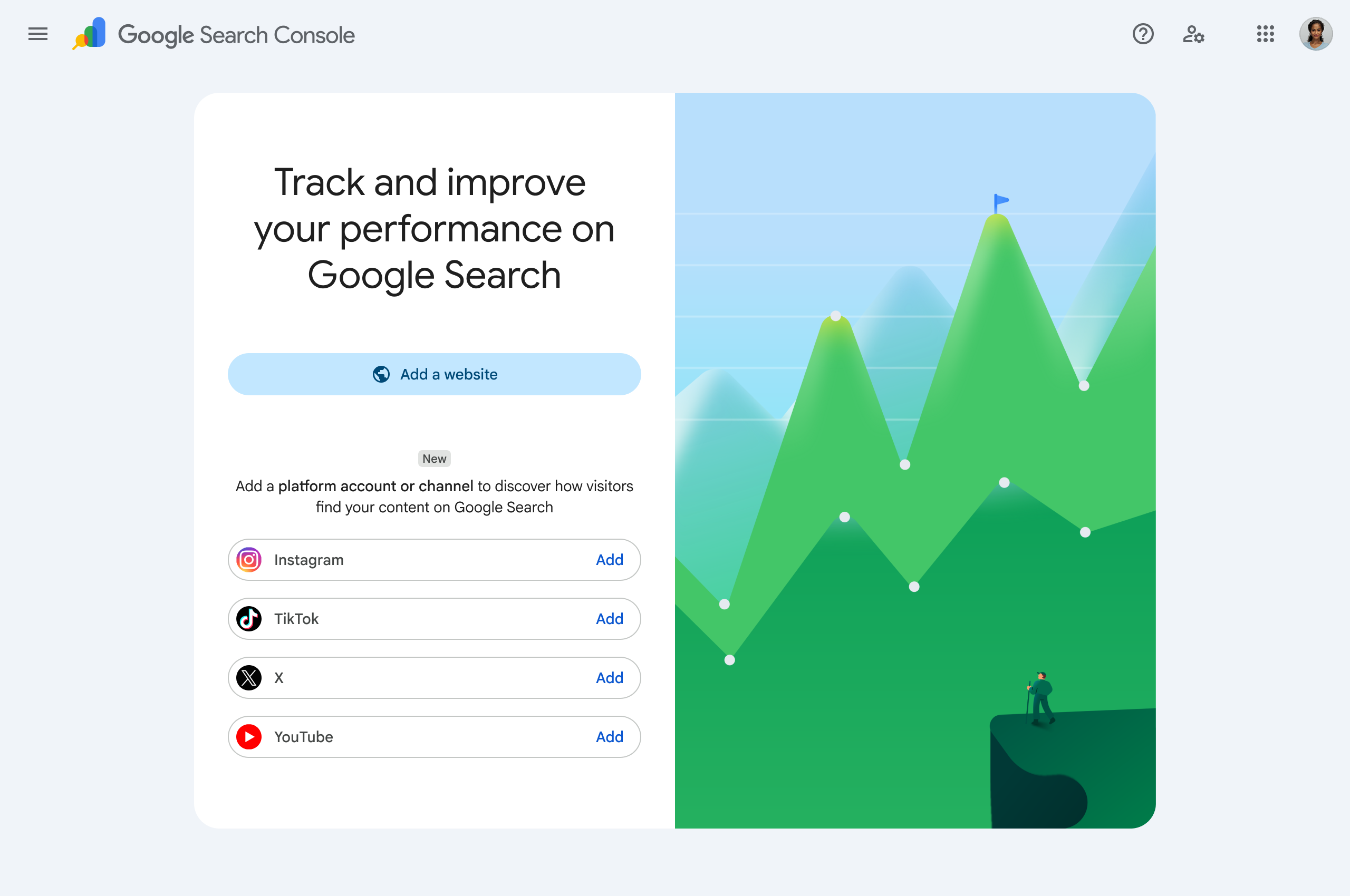
Google has introduced platform properties, a brand new property type in Search Console that lets site owners and creators see exactly how their social and video content performs on Google Search and Discover.
Two words in that sentence deserve attention. First, "creators"
Google is explicitly framing this for individual creators as well as brands, meaning influencers and content creators can verify their own accounts and measure their Google visibility directly. Second, "Discover": this covers Google's Discover feed as well as Search, so you're seeing performance across both of Google's biggest discovery surfaces.
That means for the first time, you can verify your Instagram, TikTok, X and YouTube accounts inside Search Console, the same tool your SEO team has been living in for a decade, and see the following:
Performance report: Total clicks and impressions for your social content in Google Search, filterable by individual post and by query, with full data export if you want to pull it into your own reporting stack.
Insights report: A high-level view of recent traffic trends, your top-performing posts, and how people are discovering your accounts through Google.
Achievements: Milestone tracking, like hitting a new clicks threshold from Google Search over a rolling 28-day window.
Let's read that Performance report line again and see what's got the Rise group chats excited.
You can now see the exact search queries driving people to your social posts.
Keyword-level data. For TikToks. In Google's own tool.
If you work in social and that doesn't make you sit up, read it a third time, or drop us a message and we'll be happy to explain why it's made our day.
Why this matters more than it looks
On the surface, this is a reporting update. In reality, it's Google formally acknowledging something the industry has been slow to accept: discovery doesn't live on your website anymore.
What this changes for brands
Social SEO now has a native source of truth. Until now, proving that search-optimised social content worked meant triangulating platform analytics, third-party tools and educated guesswork. Now the query data comes straight from Google. Every caption, hook and keyword decision your social team makes can be measured against actual search demand.
Your SEO and social teams officially share a dashboard. If those teams still operate in silos (separate tools, separate KPIs, separate meetings), this update just changed that. The queries pulling users to your site and the queries pulling users to your TikTok now live in the same place. Your strategy should too.
Content decisions get sharper. When you can see which posts win impressions from Google and which queries they win them for, you stop guessing. Trending-up posts tell you what to double down on. Query data tells you the language your audience actually uses, and that should feed straight back into your content pillars, your hooks and your keyword strategy across every platform.
Creator partnerships become measurable in search. Because creators can verify their own accounts, brands working with influencers can finally ask a question that used to be unanswerable: is our creator content showing up when people search our category on Google? That changes how creator briefs get written and how creator ROI gets reported.
What to do right now
The rollout is happening gradually over the coming weeks, so here's your checklist:
Verify your platform properties as soon as they appear. In Search Console, open the property selector, hit "Add property," and you'll see the four platform options: Instagram, TikTok, X and YouTube. Follow the verification steps to authorise the connection. (Some brands are reporting profiles being auto-identified already.)
Baseline immediately. The moment data starts flowing, capture it. You'll want a "before" picture to prove the impact of everything you do next.
Audit your social content against the query data. Which posts are earning search impressions organically? Which queries are you visible for, and which category terms are you missing entirely?
Get SEO and social in the same room. Shared data demands a shared strategy. Map your social content calendar against search demand, not just cultural moments.
The bottom line
Social search stopped being a prediction a long time ago. Now it's not even a debate. It's a report in Search Console.
The brands that win from here are the ones who treat every platform as a search surface and every post as a ranking opportunity. That's been Rise at Seven’s whole thesis since day one. Nice of Google to build the dashboard though - cheers google!
If you want help turning this data into a strategy, from social search audits to full multi-channel search programmes, [our Social SEO/Search team] is exactly where we live. And if you want the bigger picture on where search is heading across every platform, our Multi-Channel Search Report 2026 has you covered.
"Performance data for social content is a huge addition to the Google Search Console suite, and one that is much needed as Google search results have been serving more and more video results to users in recent years. For some categories, we see up to 90% of SERPs including video SERP features!
Some of Rise at Seven's social SEO strategies have the primary objective of making social content more visible in Google SERPs, so this new first-party data source will help to reinforce the fantastic results our teams are already seeing. Up until now, this type of performance reporting has relied on third-party data sources. Now, the combined website and social performance data will give us a holistic view of a brand's presence in Google's search results."
Google isn't building measurement infrastructure for content it considers a sideshow. Social and video results have become such a significant part of the search experience that Google is now handing brands the tooling to manage them like owned search assets, because functionally, that's what they are.
It's also worth clocking what's genuinely new here: Google is letting you verify and claim properties on domains you don't own. Your brand's presence on tiktok.com and instagram.com is now, in Google's eyes, yours to measure and optimise. That's a structural shift in how search visibility gets defined: from "your website" to "your brand, everywhere it shows up."
And it works both ways. "With Google's algorithmic focus on brand entities getting stronger and stronger, it is not a surprise that they would make a move like this for GSC, which now shows a fuller picture of a brand's presence beyond just their website," said Jake. "It also has the knock-on benefit for Google of having confirmed data showing the relationships between authenticated social accounts and domains, giving a concrete picture of a brand's digital footprint directly to their algorithms."
This didn't come out of nowhere. Google trialled social channels inside Search Console Insights back in December 2025, and rolled out generative AI performance reports in June. The direction of travel is unmistakable: Search Console is evolving from a website tool into a brand visibility tool, spanning traditional results, AI surfaces and now social platforms.