Stay in your lane: brand consistency is the biggest open goal in AI search
Share
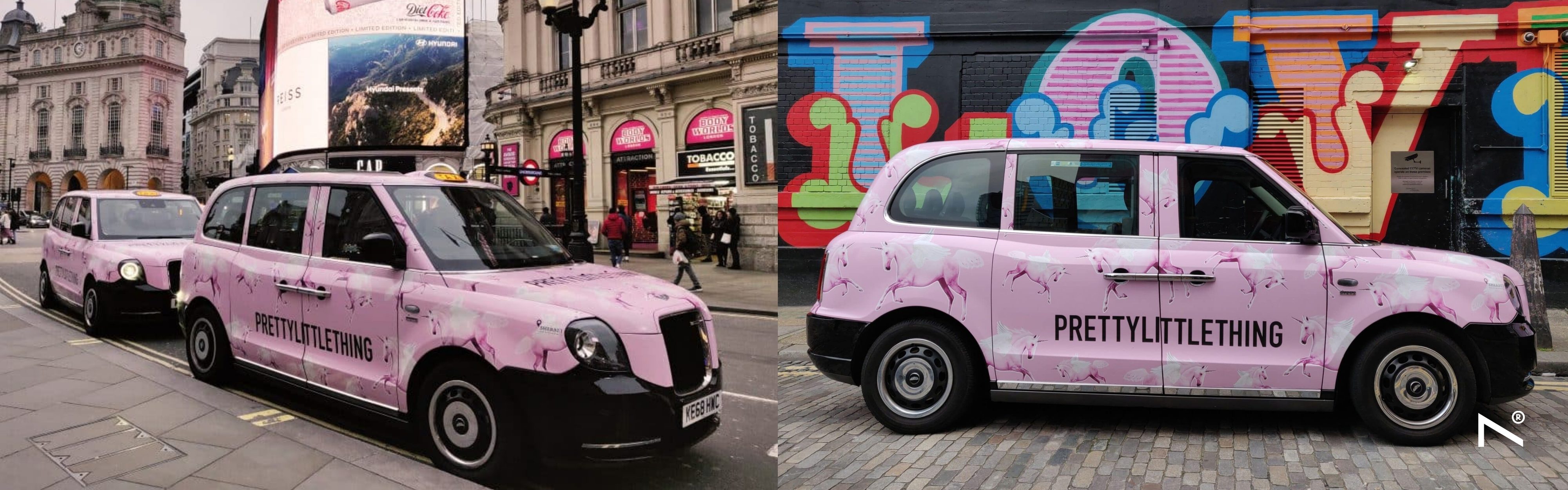
For years, PrettyLittleThing paid to wrap London black cabs in pink and cover them in unicorns 🦄
I was Global Head of Digital Marketing there at the time. There was no ROI attached to those taxis. No attribution model, no dashboard, no last-click anything. We did it because we wanted to be the pink brand with the unicorns, and because we were willing to keep being that for long enough that it became synonymous with us.
Photo credit: Sherbert London
I spent 12 years brand-side, at brands like Emirates and then PrettyLittleThing, and in 2020 I hired Rise at Seven as my agency. I joined Rise properly in February 2026, so I've seen this from both sides of the table. Of everything I worked on, the taxis taught me the most unexpected lesson.
Consistency isn't a media strategy. It's a decision about who you're willing to be in public, over and over, which your brand’s “last-click attribution, immediate ROI needed” view of marketing performance might not recognise the actual value of.
That's turned out to be worth a lot more than any of us realised at the time, because the Large Language Models (LLMs and AI search) are now deciding how your brand gets described and have very little patience for a brand that keeps changing its mind about what it is.
Brand consistency and entity alignment across all your channels is going to be marketers biggest priority in 2027 and it starts with search and SEO (where brand consistency probably is weakest). Lets dig deeper on this…
Consistency was never about having the biggest budget
Emirates, where I was before PrettyLittleThing, shows up in sport with a thoroughness most marketing teams would find exhausting. Football, rugby, cricket, tennis, sailing, basketball, horse racing. Easy to look at that and decide the answer is just ✨spend more money ✨
It isn't, and the logic underneath it is more interesting than the spend. Some of it is straightforwardly commercial: Emirates flies to the cities of the clubs it sponsors, so the sponsorship and the route map argue for each other. They talk about it that way, too. When Emirates announced its NBA deal in 2024, Boutros Boutros, who runs marketing and brand for the group, said the portfolio had until then "covered the whole world, except USA". A gap on a map, waiting to be filled.
But the bigger reason is who those sports put you in front of. The audience I always understood us to be buying was the business class traveller every Gulf carrier is fighting over, and by and large those people follow sport.
So being in football and rugby and cricket and sailing at once isn't breadth for its own sake. It means someone in that group can't really watch sport anywhere in the world without being reminded Emirates exists. And because every one of those properties says the same thing about who the brand is for, nobody watching a Champions League night or the racing at Meydan is confused about which end of the market it's aiming at.
None of that works on a campaign timeline. Asked how many years these deals are meant to run for, Boutros's answer was: "in terms of years, we would like to say, it's indefinite."
The pink taxis were doing the same job on a much smaller budget in one city. And yes, both my examples are brands with money. But money buys you more places to turn up, not the discipline to keep saying the same thing once you're there, and it's that discipline which ends up as the biggest benefit.
The ground moves every single day
Which is where it gets difficult, because the category underneath you won't sit still. The way people use your product changes. What they're worried about changes. The emotional temperature of a whole category can flip in a day off the back of one TikTok, one celebrity, one result.
AI search does the same thing on its own schedule. Pain points shift. The sources that get cited get replaced. The narrative a model reaches for when someone asks about your category gets rewritten with no announcement (which will feel familiar to anyone who's lived through a decade of algorithm updates).
So consistency can't mean set and forget. It has to mean telling the same story against a category that won't stop moving, which is a different operating model to the one most teams are running.
What an LLM model is actually doing when it decides who you are
This is less technical than people expect. It's closer to gossip.
If you asked six of my colleagues to describe me you'd get roughly the same answer. Not because any one interaction was decisive, but because they've watched me behave consistently for long enough to form a view. Nobody's reputation comes from one good shirt or one gym selfie. It builds up.
A model builds its picture of your brand the same way. People call that picture your "entity", and it's worth being careful with the word, because an entity properly means something narrower: a thing a system can resolve and tell apart from everything else, through structured data, a Wikidata record, sameAs links between your profiles. That's largely a technical job and worth doing, but what I'm describing sits on top of it. Once a model knows which company you are, it still has to decide what to say about you, and it builds that from the consensus across everything it can see.
Which is why that consensus behaves more like brand equity than like a ranking.
Whatever a model absorbed during training is fixed until the next one, so that part you genuinely can't sprint at. What it goes off and fetches to answer a question today is a different matter and moves much faster. What you can do on either timescale is muddy it, and plenty of brands are doing that right now without realising, because the signals they're sending don't agree with each other.
Which is where staying in your lane starts to pay. If your category is full of brands whose positioning wobbles every time a channel gets a new head of marketing, then simply being consistent for two years makes you the clearest, most confidently described entity in it. You don't have to be the loudest brand in the room. You have to be the least confusing.
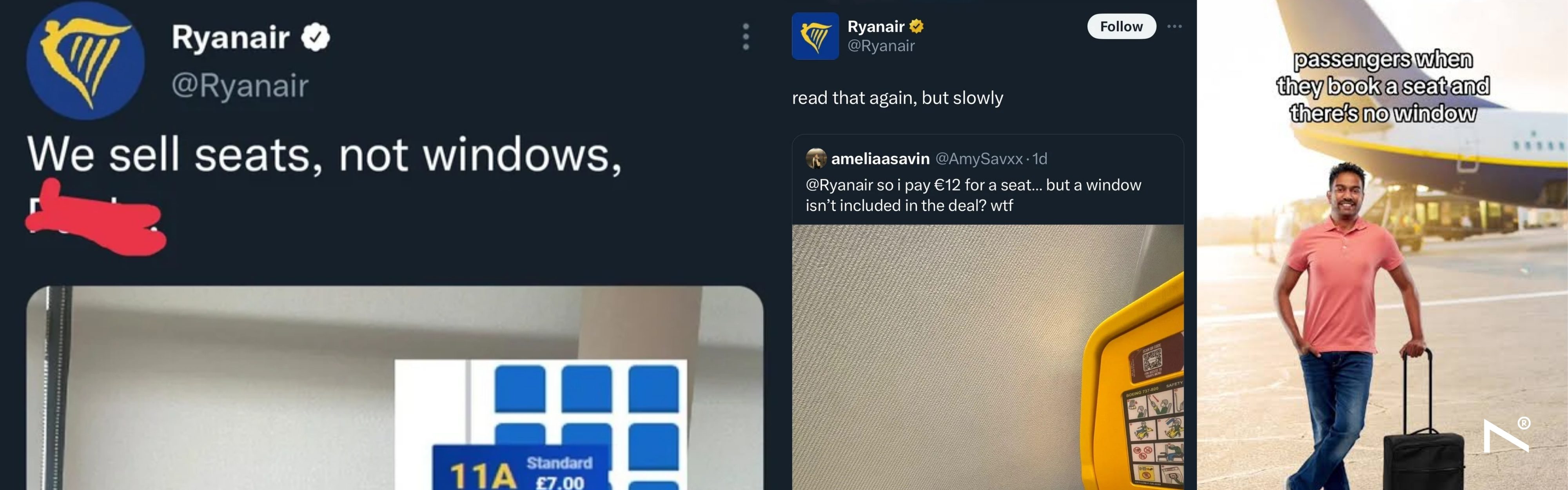
Ryanair proudly positions itself as a low-cost airline. So proudly, in fact, that it will openly joke that your window seat might not even have a window.
Despite “luxury holiday destinations” attracting 5.5K searches a month - and despite Ryanair flying to places such as Nice, the gateway to Cannes - you won’t find a single piece of Ryanair content or title tag targeting the luxury travel category.
That isn’t an oversight. It’s consistency.
Ryanair has deliberately avoided building luxury entity signals around its brand because that isn’t the category it wants to own. Every signal reinforces the same identity: cheap flights.
As a result, LLMs consistently cite Ryanair as the number-one brand for cheap flights. It hasn’t tried to be everything to everyone. It has defined its category - and owns it.
So how can you achieve this?
“The real shift isn’t your tactics. It’s how you run the team.”
Matt Holmes
Executive Director, Integrated Strategy @ Rise At Seven
I didn't fully appreciate this bit until I moved agency-side and started looking across a lot of brands at once. Almost nobody is set up for it. Not brands, not agencies, us included until we changed it.
Think about who owns the channels feeding your entity. SEO. PR. Social. Content. Community. Reddit. LinkedIn. Founder brand. In most businesses of any size those sit with different teams, sometimes on a different floor, sometimes in a different building, often in a different country on a different planning cycle, reporting to a different director with a different set of numbers to hit.
Every one of those teams might be doing excellent work but collectively they can still be pulling your entity in six directions, because until very recently AI visibility wasn't anybody's job. It sat in the gap between the boxes on the org chart.
You can see what it costs in very small, specific things. A sponsorship that only exists on your own website. A trade show appearance nobody wrote up anywhere a model can read. A partnership PR announced, SEO never referenced and social never mentioned again. Each one is a signal about who you are that you paid for and then decided not to send.
The fix isn't a tactic. There are two parts to it and both are structural.
First, move from campaigns to always-on. Campaigns go on, off, on, off, and every time they go off the line drops, so the next one starts from rebuilding rather than compounding. Always-on is a line that never drops. Less exciting to present but worth considerably more.
Second, somebody has to own the thread. Not own every channel. Own the thread between them. Someone whose actual job is to ask whether a piece of content, or the way you talk about a customer problem, holds up across search, PR, social, community and the founder's LinkedIn at the same time.
Without that, "integrated" is a value on a slide.
We just realigned our teams around this at Rise, which is why my role sits across the channel teams instead of inside one. None of it needed new tooling or new people. It needed different reporting lines and perspectives, and I won't pretend that's simple. Changing who reports to whom in your org is probably a political project with a lot of considerations to navigate. It's still a cheaper problem when the rewards for doing so are so great, and so needed by the way the landscape has shifted
Most of your competitors haven't thought about it this way yet, which means the bar is embarrassingly low. Nobody needs to outspend anyone here. The whole game is getting your channels to stop contradicting each other.
Here's the test. Ask the models what your brand is for, then ask six people across six of your teams the same question. If those answers don't match, that's your problem right there. It won't show up on a single dashboard you own, which is half the reason it's gone unfixed this long. The only place it's visible is in what gets said about you when you're not in the room
Success isn't owned, it's rented. And the rent is due every day.